The Real “Moroccan Exception
The phrase “Moroccan exception” has become a recurring cliché, implying that Morocco, unlike most countries, enjoys a unique and exceptional degree of security and stability (noting, in passing, the very explicit absence of the concept of “development” from this “exception”). But is this really true? While some no longer accept this “exception” as an unquestionable dogma today—particularly since the May 16, 2003 terrorist attacks in Casablanca and the emergence of the February 20 Movement in 2011—one can nevertheless assert that the “Moroccan exception” is a tangible reality, confirmed by the country’s political landscape. However, it exists on an entirely different level than that of security and stability. Indeed, this “Moroccan exception” manifests itself strikingly in the principle that “everything changes in Morocco so that nothing changes,” as John Waterbury concluded in his book The Commander of the Faithful: The Monarchy and Its Political Elite. This change, designed to preserve stagnation, is a distinct Moroccan peculiarity that defies the laws of evolution and genuine change.
But for whose benefit does everything change in Morocco so that it remains untouched by any real change? For the twin pillars of authoritarianism and corruption, which have become a sort of Moroccan fatality and a fundamental pillar of the Makhzen state.
Since the Constitution of December 7, 1962, Morocco has had six constitutions—new or revised—and eighteen governments. This should imply that each new constitutional text brings an evolution in the modes of governance and management of public affairs, reflected in a retreat of authoritarianism and absolutism, alongside progress toward greater democracy, freedom, and justice. In other words, under the latest constitution, Morocco should have transformed profoundly in terms of governance and the exercise of power compared to the first edition of December 1962. This is true in terms of principles, declarations of intent, and constitutional or legal texts. But in practice and on the ground, has the nature of power—which has remained authoritarian and absolutist—really changed? Has this power become fairer and more democratic than it was under the 1962 Constitution? Has the grip of authoritarianism loosened, and has corruption—both a cause and a consequence of this authoritarianism—declined? Quite the opposite is true: corruption has triumphed to such an extent that it has become an ordinary practice, evoking neither protest nor indignation. There is indeed change when it comes to constitutions, laws, governments, and officials. But all of this change occurs precisely so that authoritarianism and corruption themselves remain unchanged.
Since 1963, legislative and local elections have been held in Morocco, supposed to embody a democratic system of governance based on the free choice of representatives by the people in Parliament and local councils, just as in established democracies. Ostensibly, this represents a concrete change aimed at building a state based on the rule of law and institutions rather than one ruled by individuals and directives. Yet the actual result is that all these elections serve to prevent the slightest change to authoritarianism and corruption. Even worse, this tandem has acquired electoral and democratic legitimacy through the ballot box. In other words, authoritarianism and corruption have become the expression of the “free will” of the people, who have supposedly “chosen” this path through their vote.
Ever since the inauguration of the so-called “alternance” government on March 14, 1998—which turned out to be nothing more than taking turns participating in authoritarianism and enjoying the fruits of corruption—leaders have repeatedly insisted that the “fight against corruption” and the “moralization of public life” are among the government’s top priorities. The result is plain to everyone: corruption has thrived and become normalized, enshrined under the “Islamist” government by former Head of Government Abdelilah Benkirane’s principle, “God forgives what is past.” In short, governments, positions, and officials change, as do constitutions and laws. Yet all this change serves solely to preserve corruption. And it is obviously absurd to expect to eradicate corruption without confronting the authoritarianism that breeds and feeds upon it, as noted earlier.
Consider other examples at a different level, which further demonstrate that in Morocco, everything changes so that nothing changes. Since October 17, 2001, when the Royal Institute of Amazigh Culture was established, initiatives hailed as “revolutionary” in favor of the Amazigh language have been announced. These were accompanied by the recognition of Amazigh language, identity, culture, and history, its integration into the education system in 2003, and ultimately its constitutional recognition as an official language in the 2011 Constitution. Together, these official decisions and initiatives reflected a genuine shift in the regime’s political stance toward the Amazigh issue. Yet despite all these advances framed as “revolutionary,” the Amazigh language remains excluded from state institutions, barred from access and unrecognized within them, as though no decision had ever been made in its favor. This means that all this change in political attitude, supposedly aimed at promoting the Amazigh language, has served only to handicap its genuine advancement. In other words, this entire evolution proclaimed by the regime had the ultimate goal of preserving the status quo in the official management of the Amazigh question. It allowed the process of arabization—political, ethnic, identity-related, and ideological—to continue at its old pace, back when the Amazigh language belonged politically to the realm of the “unthinkable.” Worse still, there is even a rollback of the few symbolic gains achieved: the teaching of the Amazigh language has ground to a halt and completely vanished. The evolution of the political position on the Amazigh issue thus aims to keep its status unchanged and ensure it remains as marginalized within state institutions as it was before this change was announced.
Within this dynamic of change designed precisely to prevent any real transformation, the most critical dimension involves public freedoms, freedom of opinion and expression, judicial independence and integrity, and respect for human dignity. This area, intrinsically linked to human rights, serves as the true barometer measuring the persistence of an authoritarian state against the emergence of a state governed by the rule of law and institutions. The more deeply rooted these values are, the more authoritarianism gives way to effective democratic practice. Indeed, the beginning of Mohammed VI’s reign was marked by a genuine break in the handling of human rights, freedoms, and justice. The state officially acknowledged the grave violations committed during the era of Hassan II and established the Equity and Reconciliation Commission (IER) to settle this heavy legacy. Compensation was paid to victims or their beneficiaries, while the National Human Rights Council (CNDH) was created to safeguard these achievements and foster a culture of human rights. These advances were further consolidated through reforms to the Code of Criminal Procedure and the protective provisions of the 2011 Constitution.
No one can deny that these transformations were revolutionary. They marked a radical shift in the stance of political authority, establishing new rules to protect citizens from arbitrary rule, abuse of power, and violations of freedoms. These reforms aimed to prevent a return to the dark chapters Morocco endured from independence through the end of the 20th century, transitioning the country from Makhzen authoritarianism toward the rule of law. This turning point was unanimously hailed as the dawn of a new era grounded in respect for human dignity. Yet, all of these advances were ultimately swept aside, ignored, and disowned by the authorities, as if they had never existed. The breaking point came on May 26, 2017, with the launch of a massive, arbitrary, and punitive campaign of arrests targeting hundreds of Rifians. They were thrown into prison on surreal, fabricated charges after being subjected to various forms of cruel and degrading treatment. What the Makhzen power inflicted—and continues to inflict—on the people of the Rif, who asked for nothing more than a hospital and a school, marks a direct return to the repressive practices of the “Years of Lead.” It was precisely to break with this past that the Equity and Reconciliation Commission (IER) and the National Human Rights Council (CNDH) were created. The most glaring proof of this regression lies in the Makhzen’s weaponization of the judiciary. The justice system has once again become the executive’s armed wing to crush those who no longer fear it, to “teach them a lesson” and exact revenge, faithfully replicating the pattern of the Years of Lead when the judicial apparatus served injustice and oppression. This is the exact same fate currently suffered by the Rif detainees, sentenced by a compliant judiciary for daring to demand freedom, dignity, and social justice.
Ultimately, these radical changes, official decisions, and billions spent to safeguard human rights had only one purpose: to ensure that nothing changes in the authoritarian relationship between the Makhzen and Moroccan citizens. The authorities continue to trample on citizens’ dignity and rights with the same brutality seen during the Years of Lead. This outcome is as logical as it is obvious: respect for human rights is fundamentally incompatible with absolutism. As long as the Makhzen regime remains authoritarian, human rights can neither be protected nor respected, as their violation forms the very essence of any autocratic system.
This is the true “Moroccan exception”: changing everything so that nothing changes. Laws are modified, the Constitution is amended, and governments are replaced, but all of it serves solely to maintain authoritarianism and corruption, along with their accompanying trail of injustice, abuse of power, and systematic violations of rights and freedoms.
Arabic version | French version

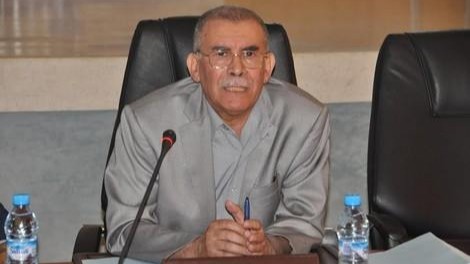
Mohamed Boudhan was an Amazigh writer, thinker, researcher and activist from the Rif, and publisher of the newspaper Tawiza. He was the author of many valuable books and articles on Amazigh identity. May he rest in peace.