Myth and Reality of an “Investigation That Will Go All the Way
As soon as excerpts from the National Human Rights Council report were leaked in early July 2017, revealing that detainees from the Hirak Rif Movement had been subjected to torture, the General Directorate for National Security rushed to issue a press release. In this statement, the agency denounced the leaked information and categorically denied that the individuals concerned had suffered any torture or illegal practices. However, given that the security apparatus itself stands accused of inflicting this torture, how can any credit be given to its own statement denying these acts? Confirming or refuting such acts of abuse must strictly be the responsibility of a body independent of the security services.
Naturally, that body is the judiciary. However, even assuming the justice system fulfilled its duty by subjecting the complainants to medical examinations and opening a judicial investigation based on their findings, it is highly likely that the results will remain buried under the veil of “investigative secrecy”—a secrecy that often amounts to burying the case outright. Indeed, when asked about the fate of the National Human Rights Council’s report regarding allegations of torture against the Hirak Rif detainees—a report he had himself claimed to have forwarded to the judiciary before the Justice and Legislation Committee—Minister of Justice Mohamed Aujjar merely responded that the investigation was covered by secrecy. Yet, an investigative secrecy that becomes virtually perpetual and whose conclusions are never disclosed is functionally identical to an absence of investigation. None of the officials involved will ever be held accountable by findings that remain unknown and, consequently, treated as non-existent. Under these conditions, invoking secrecy does not serve the interests of justice—in whose name lawmakers established the principle—but rather protects the interests of those whose involvement in illegal practices might otherwise be established. Keeping them shrouded in “secrecy,” that is to say in anonymity, spares them from being brought to justice and facing the punishment they deserve. It is, plain and simple, another way to guarantee impunity.
While authorities accused of torturing detainees from the Hirak Rif Movement evade responsibility—either by casually brushing aside prisoners’ statements on the grounds of insufficient evidence or by hiding behind an endless judicial secrecy that shields them from accountability or prosecution, given that the inquiry discloses neither findings nor perpetrators—the psychological torture inflicted on Nasser Zefzafi, who was filmed near-naked and broadcast online, represents an indisputable crime committed before millions of internet users who viewed it. The audacity to film and leak a video showcasing such an abject act demonstrates the perpetrators’ total contempt for the law. Far from attempting to conceal or deny their actions, they deliberately chose to make millions of people witnesses, in blatant defiance of the law. Such brazenness proves that these criminals carried out this flagrant offense only because they were confident of complete impunity. And with good reason: this was a state crime rather than individual abuses; otherwise, the state would have prosecuted those responsible. This heinous crime—constituting psychological torture, an assault on dignity, and a violation of the physical integrity of a detainee in state custody—plays out in plain sight on the internet. Given its blatant nature, establishing the facts and prosecuting those responsible requires neither endless investigations nor complex medical expert reports.
Indeed, the Minister of Human Rights, Mustapha Ramid, declared that “the investigation would go all the way” regarding this scandal. The King’s Prosecutor General at the Casablanca Court of Appeal also announced, via an official statement dated July 10, 2017, that an investigation had been ordered. Yet a month and a half has passed since that announcement (today being August 25, 2017) without a single detail leaking regarding the status or results of these inquiries, under the habitual pretext of the “secrecy of the investigation.” Identifying those responsible for this video would require neither extraordinary effort nor excessive time—as if it were a matter of dismantling an international network trafficking videos of stripped Rif detainees—if there were any real will to unmask the perpetrators and bring them to justice. This confirms that even though individuals (civil servants and security officers) physically committed the act, it constitutes a crime attributable to the state itself. By seeking to humiliate leader Nasser Zefzafi by showing him stripped bare, the state in fact exposed its own depravity, laying bare the unvarnished ugliness of the hateful, vindictive, and degrading methods it employs against honorable, dignified citizens in the mistaken belief that it can tarnish their symbolic stature and diminish their standing among the people. The height of absurdity lies in the fact that the investigation ordered by the Prosecutor General was entrusted to the police force itself. A glaring question inevitably arises: how can a suspect accused of committing a crime be charged with investigating their own offense?
Starting from this crime perpetrated against the hero Nasser Zefzafi—an act impossible to deny or conceal as it was committed in plain sight—one can gauge the severity of the abuses, akin to physical and psychological torture, inflicted on Hirak detainees during their police custody, abuses for which no video recordings exist to bear witness. This is especially significant since the detainees reaffirmed before the investigating judge that they had been beaten, humiliated, and filmed partially or completely naked, while also being subjected to salivary DNA sampling without their consent or a court order. These systematic violations nullify the claims of official authorities that the arrest and prosecution of those detained within the framework of the Hirak Rif Movement were carried out in the strictest compliance with the law and legal procedures.
Added to the matter of the investigation ordered by the public prosecutor’s office into the video of a stripped Nasser Zefzafi—which has yielded no apparent results—is the case concerning the death of the martyr Imad El Attabi, who was killed due to the excessive use of force and violence by public security forces to disperse a peaceful demonstration in Al Hoceima on July 20, 2017. The King’s Prosecutor General in Al Hoceima had also asserted that the investigation into the causes of El Attabi’s death “would go all the way,” and that as soon as it was completed, all legal consequences would be drawn and the public would be informed of the findings. However, given the omerta that surrounded the case of the late El Attabi from the moment he sustained a serious head injury on July 20, 2017, his clandestine transfer from Al Hoceima to the military hospital in Rabat, and the prohibition placed on his family from consulting the medical report or even seeing his remains before burial, one can easily understand the true meaning of the “end” that this investigation was supposed to reach.
It is precisely this kind of “investigation”—the announcement of which is actually akin to the definitive sealing of the case files—that inspired social media users on Facebook to post comments of biting irony. Reacting to Minister Mustafa Ramid’s promise that the inquiry “would go far” in the case of the film of a stripped Nasser Zefzafi, they pointed out that the minister was telling the truth: the investigation will indeed go so far that it will be strictly impossible for it to return to the subject at hand. Thus, the repeated assurances from officials that “the investigation would go far” or “would go to the end” are a matter of myth and illusion when it comes to crimes committed by the state itself, as the objective of such procedures is not to elucidate the truth, but to stifle it. From another perspective, this promise holds a kernel of truth: the investigation will indeed distance itself by leagues from the truth and from the perpetrators of these violations, whom it will carefully avoid approaching due to the abyssal “distance” creating a gulf between them and justice.
The worst and most dangerous aspect of these “investigations” that lead nowhere, resulting in neither the prosecution nor the conviction of any official responsible for the criminal acts in question, lies not only in the guaranteed impunity. It lies above all in the implicit encouragement it generates to systematically continue such practices and repeat them.
Arabic version | French version
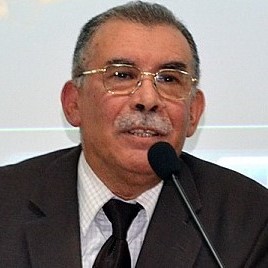
Mohamed Boudhan was an Amazigh writer, thinker, researcher and activist from the Rif, and publisher of the newspaper Tawiza. He was the author of many valuable books and articles on Amazigh identity. May he rest in peace.