Nador Protests: The Boundless Stupidity of the State
I once harbored the illusion that the Makhzen regime—despite its flaws, shortcomings, and authoritarian nature—was evolving, however slowly, toward a more intelligent form of public governance and citizen engagement. However, the events I witnessed on the evening of Sunday, December 25, 2016, at Liberation Square in Nador, confirmed my error. It served as blatant and irrefutable proof that this power is descending further into stupidity and ineptitude, moving in total opposition to any progress toward excellence or foresight.
What exactly took place?
While a peaceful gathering was underway at Liberation Square starting at 3:00 PM—convened by the Rif Popular Movement (Hirak) following the treacherous “assassination” of the martyr Mohcine Fikri on October 28, 2016—the authorities orchestrated a parallel “counter-protest.” Organized at the same time and place, this maneuver was designed to sabotage and abort the Hirak mobilization. Despite these provocations and attempts at destabilization, the rally—led by activist Nasser Zefzafi and supported by hundreds of attendees—pressed on. Seeing that their stage-managed counter-protest had failed to break the public assembly, the instigators activated a secondary plan. They ordered their armed militias to attack the Hirak participants with swords and knives to terrorize and intimidate them, and even to kill, specifically targeting Nasser Zefzafi with the intent to assassinate him. I witnessed this criminal and treacherous blade attack with my own eyes—violence that has since been documented in numerous photos and videos.
How can the state authorize a “protest” whose sole purpose is to prevent another from occurring at the exact same time and place? This constitutes an explicit incitation to confrontation and collision, carrying all the risks of civil strife, street fighting, injury, and death. How can an authority plan such chaos and violence? It is a criminal act that one would expect from delinquents, not a government. If the administration claims it had nothing to do with organizing these “baltaguia” (thugs) and cites the freedom of assembly as a constitutional right, the excuse would be even more foolish than the act itself. In that case, how would it justify its failure to intervene to prevent the two groups from clashing, especially given that the very reason for these thugs’ existence was to block the Hirak? Even if the state denies being the mastermind behind these militias, it remains fully responsible—if not by commission, then by omission. By failing to intervene to prevent these “baltaguia” from swarming the Hirak protest site, or by failing to ensure the safe exercise of the right to protest, the authorities have made themselves complicit. Remaining a mere spectator in such an explosive situation makes the state an active participant in the catastrophic consequences that follow.
The authorities’ foolishness lies in their desire to crush the Popular Movement—which troubles and unsettles them—by resorting to chaos, sedition, and the terror of private militias rather than the law. They could have intervened directly through public forces to ban the gathering, as they frequently do in countless other cases. When an authority does not ban a protest, it is duty-bound to maintain order in accordance with its prerogatives. By allowing criminals—or failing to prevent them—from attacking peaceful protesters with swords, the state is encouraging anarchy and civil war. In future rallies, participants might arrive armed to defend themselves if they face further attacks with bladed weapons like those seen in Nador on December 25, 2016. The irony is that the Moroccan authorities, who constantly boast of being a unique model of security and unity, spared from the civil wars and sectarian strife ravaging Libya or Syria, are themselves creating the conditions for such fragmentation through their actions in Nador. The same applies to their alleged firmness against terrorism. How can they claim to fight this scourge while simultaneously encouraging it by letting sword-wielding individuals attack unarmed citizens to inflict as many casualties as possible, in the manner of terrorists? How can they arrest those who praise the assassination of the Russian ambassador to Turkey on the grounds of “apologizing for terrorism,” while remaining passive toward those who transition from apology to actual physical terrorist acts right before the eyes of the security forces—and perhaps even on their orders?
The stupidity of these authorities lies in their conviction that such terrorist methods can stifle the Popular Movement (Hirak), which emerged following the “assassination” of Mohcine Fikri, the martyr of Hogra (social injustice). In reality, this approach is counterproductive; it fuels popular indignation against the authorities and recreates the very conditions that led to Fikri’s tragedy—namely, the arrogance of officials and their contempt for the dignity of citizens. Instead of working toward de-escalation by addressing the movement’s reasonable demands, revealing the investigation’s findings into the “assassination,” and fast-tracking the trial of those responsible while accepting full accountability, the state has chosen to double down. It is demonstrating a kind of “terrorist” inventiveness by using baltagia (hired thugs) to attack peaceful protesters in the streets. Do the authorities not realize that these archaic methods undermine the very foundations of the state and its sovereignty? Such behavior will inevitably drive citizens to arm themselves for their own protection, as the state has abdicated its duty to safeguard them. We are thus sliding toward a situation of lawlessness where each group, in defending itself, will replace the central authority. Through its actions in Nador, the power is itself undermining the existence and legitimacy of the state.
We understand the state’s predicament since the popular uprising began in Al Hoceima. It has failed to find a single intermediary capable of building bridges for dialogue with the Hirak committee. The political parties, which should have served as mediators, have simply vanished, leaving the state exposed without any political cover. Instead of striving to find democratic and reasonable solutions that could satisfy everyone, its “ingenuity” has produced only folly: the use of terrorist methods and the treachery of hired thugs. In doing so, it further deepens the chasm of mistrust among the citizenry. What citizen could still have confidence in a state that unleashes guard dogs in the middle of the street to frighten, terrorize, or kill? What difference remains between this power and criminal gangs or delinquents? The state’s fundamental mission is to combat such gangs and protect citizens from them, not to employ them or incite them to attack unarmed civilians.
The events perpetrated by the state in Nador on December 25 sweep aside and debunk fifteen years of rhetoric regarding reconciliation with the Rif. These acts show a total disregard for the lives of citizens, as if it mattered little if they were killed before the state’s eyes, like worthless insects. This attitude reminds me of certain racist Spanish police officers in occupied Melilla; when intervening in a conflict between two people, they leave without even stepping out of their vehicle once they realize the protagonists are Moroccan, saying: “son moros, que se maten” (they are Moors, let them kill each other). There is one key difference: those officers do not instigate the fight. Here, the state’s contempt for its citizens has reached such a level that it used them as guinea pigs in Nador to test its new “strategy” of breaking the Hirak through the terror of baltagia thugs. It cares little if lives are lost, revealing that citizens count for nothing in its eyes. This is a verbatim repetition of the “Crush his mother” (Tahn mmo) policy. Where, then, is this reconciliation with the people of the Rif? Does it manifest through contempt, insults to their dignity, and disdain for their lives?
The most serious aspect of this affair—at once bizarre and grotesque—is that these attackers, as shown in photos and videos, brandished a sword in one hand and the King’s portrait in the other. Is this not a flagrant insult to the symbol of the nation? Can the King accept a criminal carrying his image while committing atrocities, risking the perception that he acts in the King’s name? It is the height of stupidity on the part of those who distributed these portraits to be brandished alongside blades of terror. They failed to realize they were desecrating these images by associating them with terrorist acts, much like ISIS jihadists raising the photo of their “caliph” while beheading their victims with a sword. If the Nador authorities are behind this outrage to the royal portraits, those responsible must be suspended and brought to justice. If, by some misfortune, this “idea” originated from the central power in Rabat, then the disaster is absolute.
As for the sincere activist Nasser Zefzafi, who was the direct target of these individuals recruited to eliminate him, the state—whether by orchestrating this criminal act, facilitating it, or remaining silent—has ultimately turned him into a leader and a hero, though he rejects such titles out of humility and loyalty to his cause. We must therefore thank the stupidity of the state, which has transformed Mr. Zefzafi, despite himself, into a “Mandela” (referring to Nelson Mandela, the South African leader) of the Rif’s popular Hirak. It is a paradox that only the foolish commit: through their own clumsiness, they transform the adversary they sought to weaken and destroy into a shining star and a providential hero.
Arabic version | French version
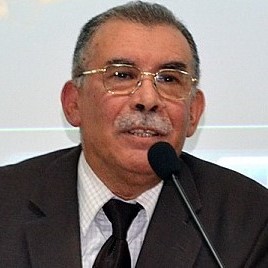
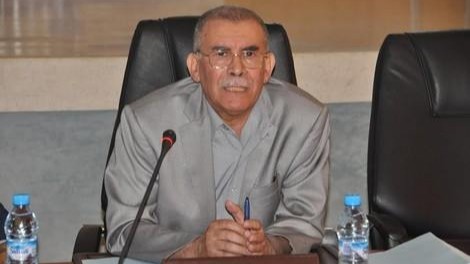
Mohamed Boudhan was an Amazigh writer, thinker, researcher and activist from the Rif, and publisher of the newspaper Tawiza. He was the author of many valuable books and articles on Amazigh identity. May he rest in peace.