Spanish Intelligence: Algeria Was the Starting Point of the Ceuta Assault
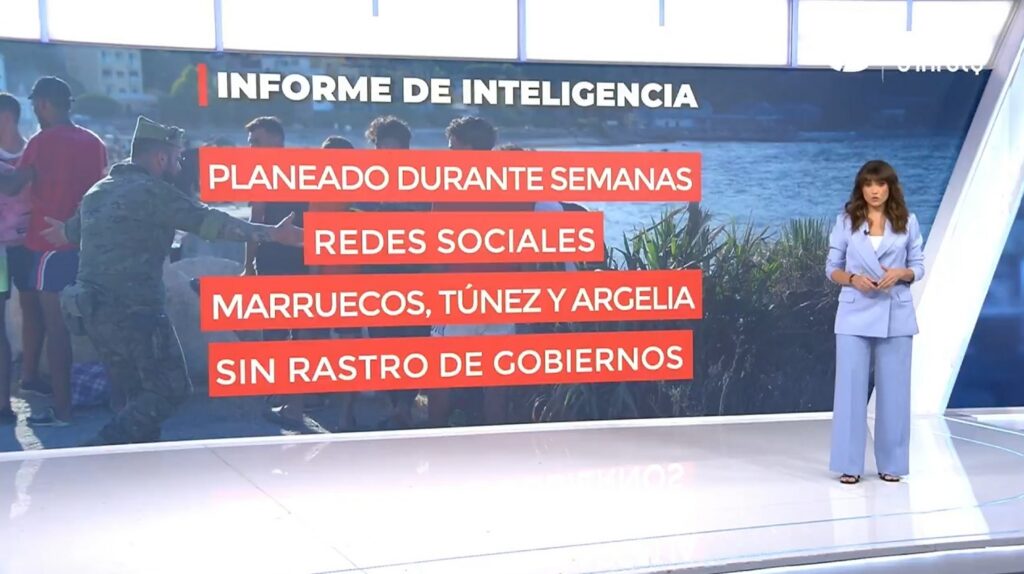
A report by Spanish intelligence services, whose details were revealed by the television channel Telecinco, has established that a large-scale digital campaign launched from Algerian accounts and groups was the initial spark behind the mass entry attempt at Ceuta on July 30 and 31, 2026.
Drawing on open-source intelligence (OSINT) techniques and social media analysis (SOCMINT), the report concludes that the digital activity unfolded over several weeks and generated more than 11 million interactions. The document focuses in particular on WhatsApp groups run from numbers with the Algerian country code +213, where information circulated about approach routes, means of transport, schedules, meeting points, and practical details for reaching the Tarajal breakwater area.
According to the report, these Algerian groups were the starting point, before being joined by digital accounts and communities from Morocco, Tunisia and France, as well as activity observed from the United States. Content then spread across TikTok, Facebook, Instagram and X, through calls for mobilization and the sharing of maps and videos.
The report notes that the intensity of this digital activity rose sharply after the Spanish Supreme Court issued its ruling in early July 2026. Handed down on June 29 and published on July 8, the ruling excludes the application of “rejection at the border” or “immediate return” to people entering Ceuta by swimming, requiring instead that ordinary return procedures be followed, with the usual legal safeguards.
The Spanish newspaper El Mundo detailed the ruling, explaining that it was issued in favor of an Algerian national who had been intercepted by authorities in Ceuta while attempting to enter by swimming in November 2024, before being immediately sent back to Morocco without administrative proceedings or legal assistance. The Supreme Court upheld his appeal, finding that entry by swimming does not cross physical border containment features such as a fence, and therefore does not fall under the immediate-return mechanism.
Algerian accounts exploited the ruling in their first campaign, promoting the idea that entering by swimming guaranteed immunity from return — a claim that helped mobilize thousands of young people, most of them Moroccan, toward the border. This mobilization led to a mass entry attempt estimated at tens of thousands of people, most of whom were later sent back to Morocco amid a humanitarian crisis.
The report concludes that the digital dimension played a decisive role in spreading information and mobilizing participants, though it does not establish any direct government involvement, focusing instead on the coordinated, cross-border nature of the campaign. Spanish and Moroccan authorities continue to manage the fallout from the episode, while the revelations have reignited debate over the role of social media in border crises.
Arabic version | French version