Tifinagh: Between Institutional Resolution and Ideological Controversy
To Khalid Samadi, former government official:
Reopening the debate over the Tifinagh script today, more than two decades after its official adoption, calls for real scientific rigor and a full awareness of the path the Amazigh language has traveled in Morocco.
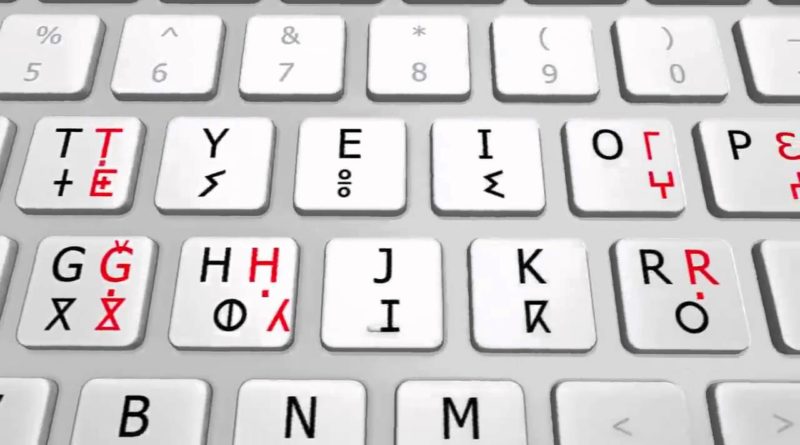
Tifinagh was never a passing choice or a technical decision open to revision every time positions shift or debates resurface. Its adoption stemmed from a decisive royal decision, followed by a comprehensive institutional, scientific, and pedagogical process in which the Royal Institute of Amazigh Culture played a central role. Since February 10, 2003, Morocco has built up substantial experience teaching, publishing, conducting academic research, and producing literary, cultural, and digital content in this script.
Reducing more than twenty years of experience to a single question — was Tifinagh the right choice? — is not scientifically defensible without an objective assessment of that experience, a study of its results, and a comparison with proposed alternatives based on measurable scientific criteria.
Studies and pedagogical work on teaching the Amazigh language have highlighted, among Tifinagh’s characteristics, what is known as orthographic transparency: a clear relationship between symbol and sound. This trait matters greatly for acquiring reading and writing skills, particularly in the early stages of learning.
Tifinagh’s very structure gives it a degree of simplicity, consistency, and transparency. Each letter keeps the same form at the beginning, middle, and end of a word, unlike Arabic script, where several letters change shape depending on their position. The letter “غ,” for instance, is written in several different forms in Arabic, while its Tifinagh equivalent stays the same regardless of position. This is not a matter of aesthetics — it bears directly on visual discrimination and on how beginning learners acquire reading and writing.
The claim that the Arabic-Aramaic alphabet is simpler than Tifinagh should not remain a mere personal impression or a preconceived notion. It requires empirical evidence and rigorous comparative studies measuring reading-acquisition speed, visual discrimination, fluency, spelling, error rates, and comprehension. Educational curricula are not built on impressions but on the findings of scientific research and field observation.
A distinction must also be drawn between the difficulty some adults face in learning a new script and a child’s capacity to acquire a new writing system. A child entering school without prior exposure to any particular writing system can learn Tifinagh quickly, given quality instruction and a clear method. It is therefore not legitimate to project some adults’ resistance to learning a new script onto children, or to turn reluctance to make the effort of learning into grounds for reconsidering the writing system itself.
Defending Tifinagh in no way means diminishing the value of the Arabic-Aramaic alphabet or denying its historical and cultural place in Morocco. That alphabet remains an essential part of our civilizational memory, but this does not necessarily mean it is the optimal writing system for the Amazigh language in schools, administration, and the digital space. Every language has its own phonetic and structural features, and a writing system should be judged by how well it fits those features and how effectively it serves teaching and use.
What is even more striking is that the debate over the script returns, almost at every stage, to occupy the center of discussion on Amazigh issues, alongside questions of dialects, standardization, and unification — as if the goal were to keep the Amazigh cause in a permanent state of re-litigation rather than moving it toward full implementation and operationalization.
It is time to move from the question of script to the question of function, from debating the choice to evaluating results, and from reopening settled files to completing the institutional and pedagogical work already underway. The Amazigh language today needs broader teaching coverage, a faster presence in public administration, expanded digital resources, stronger scientific research, more trained teachers, and wider use in the media and public life.
If some believe the Arabic-Aramaic alphabet is better suited, let them present comparative scientific evidence and demonstrate with figures and field data that the proposed alternative is more effective than Tifinagh. But relying solely on impressions, ideological leanings, narrow partisan affiliation, or personal familiarity cannot justify overhauling a linguistic and institutional path built up over more than two decades.
At its core, the issue is not which alphabet we personally prefer, but which writing system best serves the learner and the Amazigh language.
Reopening the question of Tifinagh should not, therefore, become a gateway to sending the Amazigh cause back to square one.
Morocco has made its choice and built up experience, resources, practices, and institutions around this script. What is needed today is not to tear down what has been achieved, but to evaluate it scientifically, develop it further, correct its shortcomings, and complete the implementation of the Amazigh language’s official status.
The Amazigh language does not need a new battle over the legitimacy of its script today; it needs genuine political will to activate its official status.
Those who wish to change Tifinagh should present the scientific argument justifying the scale of change they propose. Turning a difference of opinion into a pretext to reopen every settled file will, in the end, only exhaust effort and delay what should be a priority: making the Amazigh language a living one — written, read, used, and fully functional in schools, administration, society, and the digital space.
The real question today is not which alphabet should be used to write the Amazigh language, but how to make Tamazight written in Tifinagh a fully official language, present and functional in every aspect of Moroccan public life.
By Mustapha Oumouch
Arabic version | French version