Royal Institute: No Room for Politicizing Tifinagh
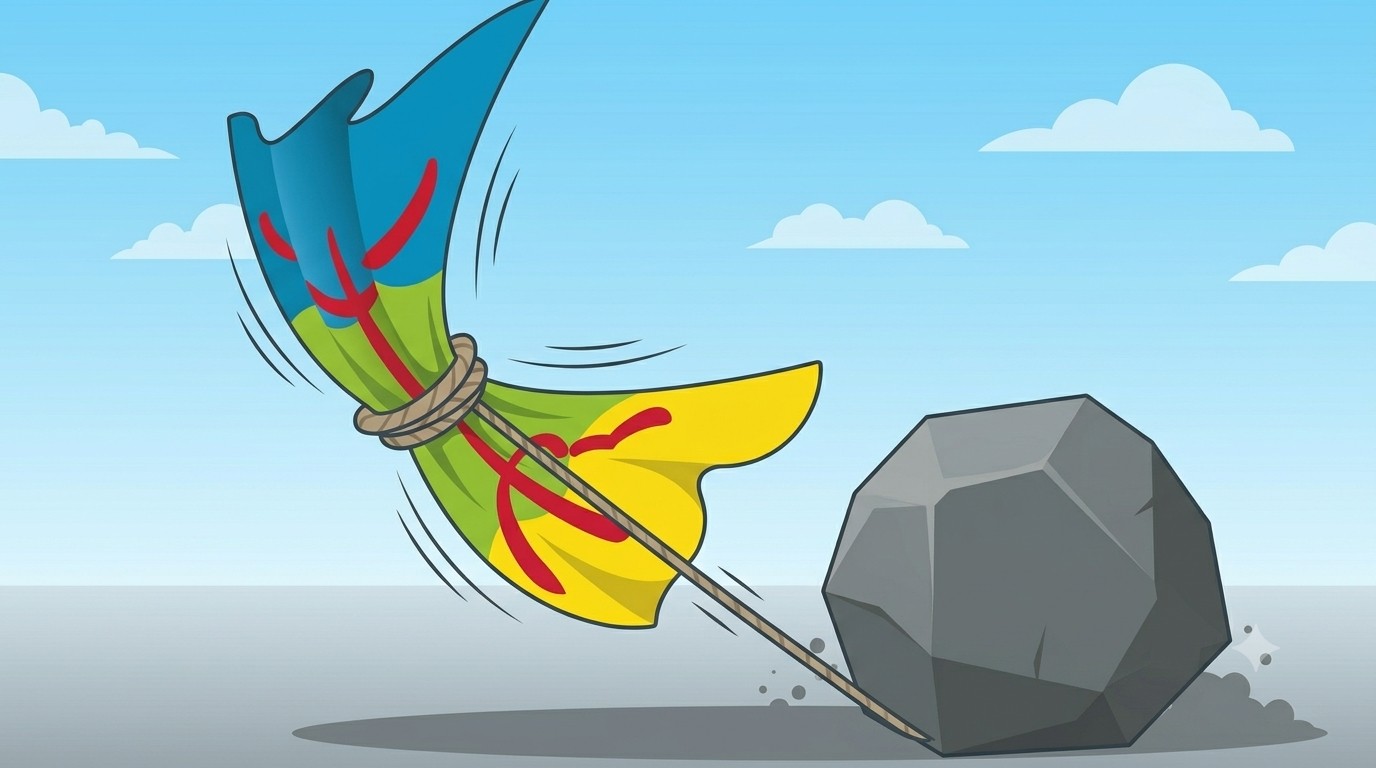
A statement from the Royal Institute of Amazigh Culture has revived a long-running debate over the Tifinagh script. The Institute says the controversy surrounding Amazigh writing in Morocco is now “moot,” arguing that the matter was settled early on the basis of studies, research, and scientific comparisons. According to the Institute, the debate “should not turn into value judgments or ideological positions” but should remain scientific, since choosing a writing system is a matter governed by precise criteria and rules.
A senior official source at the Institute — the official body responsible for codifying and developing the Amazigh language and standardizing Tifinagh — said the organization “follows the various debates” but believes such questions cannot be settled through one-upmanship or impressionistic judgments. The adoption of the script, the source recalled, rests on a simple premise: any sign or symbol recognized for writing a language moves it from the oral to the written form.
The source revisited what became known as the “battle of the script” of 2003, formally resolved on February 10 of that year when King Mohammed VI issued his decision based on the opinion submitted by the Institute. Reopening that debate now, the source said, would amount to “turning back the clock,” since the founding principle was that “whatever the symbol, it is a symbol” — with the Institute instead proposing to examine the results achieved since then.
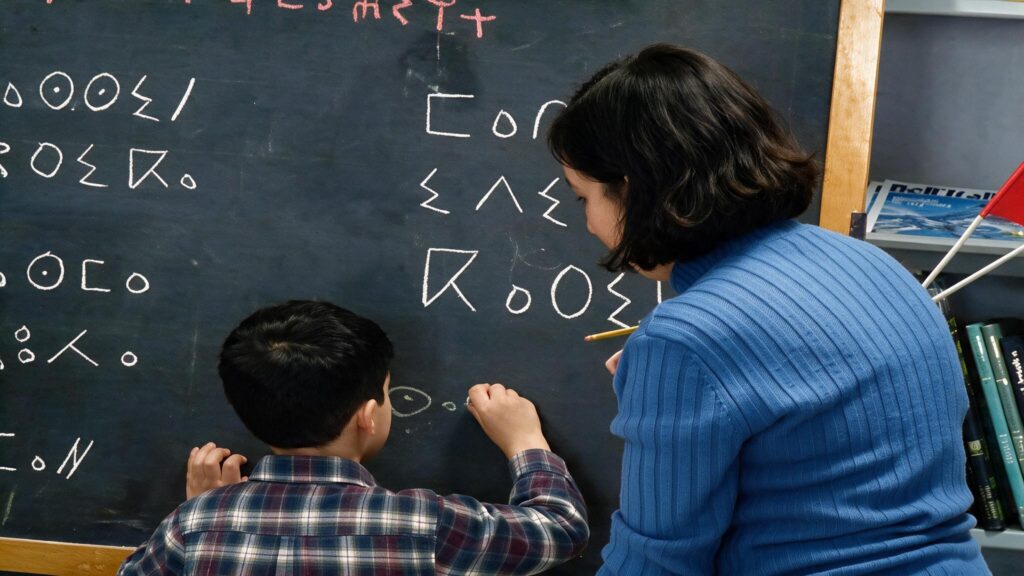
On whether the Amazigh script is capable of conveying learning, the source said the question “was settled back in 2003 and is no longer open,” noting that from the earliest years of primary school, students who do not speak Amazigh at home have managed to learn to write it easily within a few weeks.
The source called for starting from the “principle of universality,” arguing that what applies to Arabic also applies to Chinese, Hebrew, Amazigh, and other languages, since “every language has its own system.” Learning any language, the source said, requires knowing the signs that represent its sounds and meanings, as well as how to write and read them, while a writing system in itself is a framework governed by its own rules — unrelated to adding anything to the language or to any particular region.
More than twenty years after the script’s adoption, the same source defended the choice of Tifinagh, explaining that any consensus-based writing system rests on a general rule that applies across languages: peoples everywhere have agreed on signs for writing their languages and fixing the pronunciation and shape of their letters, a scientific rule that is not tied to any one language. The source noted that Amazigh has in fact been written in both Arabic and Latin script, and that when the Institute was tasked with codifying the language and adopting a system of its own, a standard had to be chosen, fixed, and formally recognized so that disagreement over it would not persist.
The source stressed that this choice “was not arbitrary,” explaining that the fixing of letterforms, the stabilization of characters, and the development of spelling rules occurred historically for Arabic as well as for the Latin alphabet, and that the same process applies to Amazigh writing. The issue, the source added, “should neither diminish nor inflate the standing of the language itself” — it concerns only the choice of script, which is why the matter should be left to linguists and specialists, with the debate the Institute has pursued since 2003 remaining within a scientific framework open to scientific argument.
The source said the Institute’s choice was based on studies and comparisons between writings done in Arabic and Latin characters, which revealed shortcomings on both sides — not from an ideological standpoint, but from a scientific and experimental one. It follows, the source concluded, that the choice of this script cannot be described as a stance against Arabic, against Latin script, or against any particular group, but rather as a recognition of its capacity to fulfill the functions required of it.
Despite criticism of the Institute’s approach from some Amazigh associative movements, the source said “considerable effort has been invested in this area” and that the current phase calls for normalizing the use of the script, describing it as “standardized according to a precise model” and capable of carrying the official Amazigh language, which was enshrined in the constitution through the 2011 text.
The source concluded by stressing that “the two official languages each have their own script” and that there is no longer any need to take extreme positions on either side, with the priority being to ensure that the Amazigh language plays its role, alongside Arabic, across all areas of life, and that Moroccans are able to read it in its official script.
Arabic version | French version