The Absurdity of Hiring Social Assistants for Amazigh
The Ministry of Justice announced a competitive exam, on March 20, 2022, to recruit judicial delegates “to carry out the tasks of social assistance and translation (Amazigh language)”, as stated in the Minister of Justice’s decision No. 04/م م ب/2022 of January 26, 2022. The Minister of Justice, Mr. Ouahbi, confirmed that the Ministry of Justice “needs male and female assistants who speak the Amazigh language, to carry out the studies the judges need and to provide a translation service for judges and for litigants who speak only the Amazigh language to convey their claims and their defenses” (source of the news here). For this purpose, “the head of government presided, on Tuesday, January 25, 2022, at the ministry’s headquarters in Rabat, over the ceremony of signing an agreement between the Ministry of Justice and the Royal Institute of Amazigh Culture, setting the general framework of cooperation and coordination between them to integrate the Amazigh language into the field of justice”, according to the Ministry of Justice website (click here).
All these measures that the Ministry of Justice is taking, from concluding an agreement with IRCAM to hiring social assistants…, are meant to “roll out” (tanzil) the provisions of the organic law on Amazigh No. 26.16, with the aim of “rolling out” the constitutional official status of Amazigh as the provisions of Article 5 of the Constitution require. I put the word “roll out” in quotation marks because it has become one of the terms most used by government officials whenever it is a matter of implementing the official status of Amazigh, although its sense suits neither the standing of an official language nor the purpose of making this language official, as I will explain below.
“Rolling out” something that does not exist:
For the Ministry of Justice, hiring social assistants, or judicial delegates as the ministry calls them, falls within this “rollout” of organic law No. 26.16. This initiative may seem fine and welcome, showing the good intention of the ministry, and with it the government and its head, to speed up this “rollout”. When we ask: “rollout” of what? the answer is: “rollout” of organic law No. 26.16 to implement the official character of Amazigh. But when we go back to this organic law and read and reread it, we find in it no real and functional implementation of Amazigh, particularly in the field of justice where the Ministry of Justice intends to hire judicial delegates who can speak Amazigh (60% of them must be Amazigh speakers) to help Amazigh-speaking litigants. If we know that the concept of an official language means the language in which the state’s official documents are drawn up, and we know that organic law 26.16 is free of any use of Amazigh as a language for drawing up documents used in the judiciary, such as judgments, judicial police records and expert reports…, then we are facing the “rollout” of something that does not exist: “rolling out” the official status of Amazigh in the judiciary in application of the provisions of an organic law that contains no official status of Amazigh in the field of justice.
Article 30, the only article the organic law devoted to what it called “integrating Amazigh in the field of litigation”, says: “The state guarantees to litigants and witnesses who speak Amazigh the right to use the Amazigh language and communicate in it during the procedures of search and investigation, including the stage of questioning before the public prosecution, the procedures of examination and the procedures of hearings in the courts, including supplementary inquiries and investigations and pleadings, as well as the procedures of notification, appeals and enforcement. The state shall provide for this purpose a translation service free of charge to litigants and witnesses. Litigants have the right, at their request, to hear judgments pronounced in the Amazigh language. To that end, the state works to qualify the judges and court staff concerned to use the Amazigh language.” There is thus nothing new concerning the position of Amazigh in the judiciary compared with what it was before it became official. Providing translation, during the stages of litigation, to someone who speaks a language the judicial officials do not understand is a known measure that the Criminal Procedure Code provides for in many articles, such as articles 21, 47, 120, 121, 145, 147, 318… As for the right to hear judgments pronounced in Amazigh for whoever asks, even if we regard it as something new, it remains an oral measure that does not make Amazigh a language used in writing in the field of justice, knowing that this written use is the condition that confers on a language the character of being official, for example by having this pronouncement of judgments in Amazigh matched by their drafting in Amazigh. As for “qualifying the judges and court staff concerned to use the Amazigh language”, if it seems new with regard to the official use of Amazigh, it remains without any real effect on that official use, as we will explain below. The result is that this article (30) gives Amazigh no real official use, written and functional. All it gives it, in a few cases, is its oral use, whereas the official status of Amazigh was decided only to go beyond this oral use and move it to the level of written use.
A “communitarian” hiring that does nothing for the official status of Amazigh:
It is within this “oral” framework, which does not allow a real official use of Amazigh, that is, written functional use, that the hiring of judicial delegates falls, whose task is “to provide a translation service to judges and to litigants who speak only the Amazigh language to convey their claims and their defenses”. What do this hiring and this task mean? They mean implementing, not the official character of Amazigh, but its oral character. Yet Amazigh has always been oral, and so Article 30, with the whole of organic law No. 26.16, added no new element to move Amazigh from oral use to written use. For the aim of making Amazigh official is not to entrench its oral character, as this organic law did, but to raise it to the level of a school and written language. Without a decision on the written use of Amazigh in the judiciary, with the serious, compulsory and unified teaching this requires, hiring judicial delegates to help Amazigh-speaking litigants, as an implementation of this language’s official character, is a joke and an absurdity. It might be useful if it were decided within the framework of social assistance and not within that of implementing the official character of Amazigh. Let us note that the organic law used, in Article 30, the expression “field of litigation” and not “field of the judiciary”, in line with the oral use of Amazigh for the benefit of litigants, whose speech varieties may differ, independently of the written language of the judiciary as a system representing the sovereignty of the state. But what is dangerous in Article 30, on integrating Amazigh in the field of litigation, is that its application is conditional on the existence of a particular category of Moroccans, the category of Amazigh speakers. This is a categorical and communitarian measure that flatly contradicts the Constitution, which states that Amazigh is a “common heritage of all Moroccans without exception”, whereas Article 30 made it a heritage specific to its speakers. Whereas the reason for making Amazigh official is for it to be the language of all Moroccans, as the concept of an official language of the state requires. And it is this communitarian measure that imposed hiring social assistants under a communitarian condition, namely their mastery of Amazigh at a level of 60%.
Teaching as the precondition for implementing official status:
The problem is that confining the implementation of Amazigh’s official status to oral use, as the organic law did, particularly in the field of justice, is a bet on its gradual but certain death, owing to the growing decline of this oral use of Amazigh, which leaves it unable to reproduce itself and pass from one generation to the next through this oral use, which remained until 1912 the mechanism that preserved Amazigh’s survival and protected it from death and disappearance. Thus, after a period that may be short or may stretch to a few centuries but is inevitable, if we keep relying only on the oral use of Amazigh, there will be no need to hire judicial delegates to help Amazigh-speaking litigants, because there will be no Amazigh speaker. This is the result that the drafters of the organic law know and expect, who wrote it in a form that fits and leads to this result. If we know the conditions in which this organic law was prepared, and the anti-Amazigh “PJD” government that wrote and adopted it, we will know that this law’s bet on the death of Amazigh through the disappearance of its speakers in the future is what explains its focus on the oral aspect, that is, the aspect that hastens Amazigh’s death.
Whereas the purpose of making Amazigh official is to protect it from this death lying in wait for it, by moving from its oral use, which has become the gravedigger of its tomb, to its written use. And the precondition of this use is teaching it, not in a formal and symbolic way, but seriously and really, compulsory and unified. It is this teaching that will provide, after a period that may be put at 10 to 15 years, staff able to communicate in Amazigh, not only with the “community” of its speakers, whose number declines year after year, as we explained, but with the various service users and litigants, whose educated members are presumed to be proficient in Amazigh too through having learned it at school. Implementing Amazigh’s official status in the field of justice therefore does not need hiring social assistants to communicate orally with the “community” of Amazigh speakers, but teaching it, seriously and really, compulsory and unified, so that in 10 to 15 years, or even more, it becomes the language of the various staff in the various administrations, who will be able, thanks to their schooling in it, to communicate in it with all Moroccans, given that it is an official language. That is why “qualifying the judges and court staff concerned to use the Amazigh language”, as Article 30 puts it, has no meaning outside their prior schooling in Amazigh, which will enable them, after the period indicated, to be proficient in using it and communicating in it with litigants, and even drafting judgments and judicial orders in it as an official language of the state, so that a judge (and even an ordinary employee) is not presumed ignorant of the official language, because the judiciary is the embodiment of the state’s sovereignty, of which the official language is one manifestation. This will not be applied, as I said, tomorrow or the day after. But what is expected to be applied immediately is to start providing the conditions that will make judges and various staff able to work in Amazigh in 10 to 15 years, as I explained. And these conditions come down to teaching Amazigh, in a real and serious form, compulsory and unified, as I wrote.
Accordingly, if the new government is serious, as a number of its officials have said in their statements, about implementing the official character of Amazigh, the first task it must undertake in this regard is to teach Amazigh in a way that breaks definitively and irreversibly with the formal and sterile character that has always attended this teaching, so that it is teaching for the official, written and functional use of Amazigh, and not teaching for the sake of teaching, as it has been since its launch in 2003.
Conditions for serious and real teaching of Amazigh:
For this teaching to succeed, many conditions must come together, financial, educational, administrative, human… But all these conditions depend on the condition of conditions, which is the existence of a real political will to raise Amazigh to a real and functional official language. Within this political condition (the existence of political will) is that the state reconsider:
— first, the standing of Amazigh in a direction that makes it a tool of social and professional advancement, by requiring proficiency in it to hold public posts after a period that may be put at 15 years, so that only those who have studied it for a sufficient number of years to be proficient in it, and able to work in it as a working language in public administrations, are subject to this requirement. This requirement (proficiency in Amazigh) is necessary to create demand for it when proficiency is required to improve one’s social and professional position and to get a job and a post.
— and second, its language policy as it inherited it from the “National Movement”, by working to change the positions, convictions and practices related to the Amazigh language, particularly the mentalities that produce those positions, convictions and practices, together with accompanying measures to its official functional implementation, aiming, again with the state’s intervention and planning, to spread the values of Moroccans’ pride in their Amazigh identity. For the implementation of the official character of Amazigh cannot succeed while the same practices and mentalities that lay behind the exclusion of Amazigh continue.
As for the educational and pedagogical conditions, which are tied to the existence of political will because they always need a political decision, they include a set of elements, the most important of which are:
1. generalizing compulsory and unified teaching of Amazigh, horizontally and vertically, from pre-school to university;
2. giving it, as a compulsory subject, a motivating preferential factor, to strengthen the creation of demand for it;
3. allocating it a preferential weekly time allowance as well;
4. making it from the start, gradually, the language of instruction of some scientific and literary subjects;
5. establishing a serious and effective educational inspection system for monitoring, follow-up and evaluation;
6. seriously and strictly following up the extent to which regional, provincial and local officials carry out the education ministry’s decisions and directives on teaching Amazigh;
7. creating special departments for training Amazigh-language teachers in the training centers (which has already begun);
8. creating special departments for training educational inspectors of the Amazigh language in the inspector training centers, to complete the links of the logistical chain necessary for the success of teaching Amazigh;
9. opening university streams, gradually, to teach some specialties in Amazigh, such as legal studies, so that it completes its educational cycle, which lets it reproduce itself.
The real “rollout”:
I wrote, at the start of this discussion, that the sense of “rollout” of organic law No. 26.16, as officials repeat it, suits neither the standing of an official language nor the purpose of making this language official, for the standing and the purpose, as fixed by paragraph 3 of Article 5 of the Constitution for Amazigh, are its use as an official language of the state. But the organic law, which is to be “rolled out” for this official use, does not allow this official use, because this law “lifted” this official status, that is, abolished and removed it, which I showed in the article: “An Organic Law to Execute Amazigh” (click here). If the official status of Amazigh is “lifted” and does not exist within organic law No. 26.16, there is no point in trying to “roll it out” according to the provisions of this law. What is to be done, then?
Here we come back to the condition of political will. If it exists, it is possible, even easy, to “roll out” the official status of Amazigh, either by amending and correcting the present organic law or, to save time, by relying directly on the provisions of paragraph 3 of Article 5 of the Constitution, which is superior to the organic law and which says that Amazigh is also an official language of the state. It is not only a matter here of affirming the official status of the Amazigh language: by the use of the word “also”, this paragraph indicates that what applies to Arabic as to its use as an official language applies similarly to Amazigh. Consequently, if Arabic is used in writing and functionally in the various state institutions, after the staff of those institutions have received schooling in Arabic, it follows that Amazigh will also be used in the same functions and the same institutions and will benefit from the same teaching. Which requires its serious and real, compulsory and unified teaching, so that it performs the same functions Arabic does. And we notice that each time we come back to teaching, which is the key to implementing the official status of Amazigh.
Difficulties and obstacles:
It is easy for those who reject using Amazigh as a language of the judiciary to say that using it to draft judgments will raise the question of in which of the two official languages these judgments will be drafted, to show that there are real practical and procedural difficulties that do not ease using Amazigh as a written language in judicial documents, especially judgments. But if every time we intend to implement the functional official status of Amazigh we invoke the constraints and difficulties that may obstruct this functional official status, we will not advance a single step in implementing Amazigh’s official character at the level of its functional and written use, for such constraints and difficulties may confront us in every field where Amazigh might be used as an official, written and functional language. For example, we will not succeed in teaching it so as to move it from oral use to functional written use, on the pretext that there are three Amazigh varieties that make it hard to teach a unified common Amazigh. Thus one can always plead the existence of difficulties and obstacles that prevent completing the process of implementing the official character of Amazigh.
But the problem is not that these difficulties and obstacles exist and are real; the problem is that we content ourselves with citing them as justifications and do nothing to get past and overcome them. Whereas making Amazigh official, in writing and in function, is from the start a kind of challenge to these difficulties and obstacles. What does teaching Amazigh to all Moroccans mean if it does not mean its gradual unification through the school to get past its dialectal aspect, which differs from one region to another? What does drafting judgments in Amazigh mean if it does not mean finding at the same time a solution to the problem of using two official languages in the same country?
On the other hand, if there are real difficulties and obstacles that do not ease the written and functional official status of Amazigh, that is due to its long marginalization. The more we delay its written functional official status, the more difficulties and obstacles there will be. For example, had teaching Amazigh begun at independence, there would be none of these difficulties today that stand in the way of implementing its official status. Indeed, had its teaching succeeded since it was decided in 2003, its official implementation would today be a simple and easy operation.
To break this vicious circle, in which the delay in implementing the official character of Amazigh leads to more difficulties that obstruct that implementation, which in turn leads to more delay in the same implementation, a real and strong political will is needed among officials for a real and functional implementation of Amazigh’s official status. That is what we expect from the new government, which has expressed more than once that it has this will.
Arabic version | French version
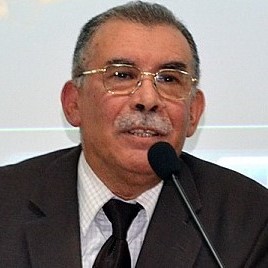
Mohamed Boudhan was an Amazigh writer, thinker, researcher and activist from the Rif, and publisher of the newspaper Tawiza. He was the author of many valuable books and articles on Amazigh identity. May he rest in peace.