The Catastrophe of the Language of Communication with the Earthquake Survivors
What Moroccan television did during its coverage of the Al Hoceima earthquake (February 24, 2004), “torturing” the survivors it interviewed in Arabic (meaning Classical Arabic), it is repeating in its coverage of the Al Haouz earthquake (September 8, 2023). That is why, regarding this latest earthquake, I will repeat more or less what I wrote in issue 84 of the magazine Tawiza in April 2004, under the title “The Earthquake and Classical Arabic!” (click here), about the conduct of Moroccan television channels during the first earthquake.
How inappropriate, tactless and even inhumane it was for these channels (Al Aoula, 2M, Medi1…) to use Arabic to communicate with the survivors of the Al Haouz earthquake, when these people do not even master Darija. Instead of speaking about their suffering spontaneously and comfortably, they struggle to find “classical”, or at least suitable, Darija words to express themselves, and cannot find them. The message the reporter wanted to get across to the viewer then disappears, the speech becomes jumbled, the meaning is blurred and the point of live coverage is lost. When the journalist puts questions in Arabic to a local administration official, a municipal councillor, a doctor or a nurse…, it is Moroccans’ “language complex” (click here), entrenched by identity-driven and ideological Arabization, with the contempt it carries for the two national languages (Amazigh and Darija), that pushes the official to answer in Arabic, a language he has perhaps never improvised in his entire life. He stammers, becomes flustered and jumps from one word to another, with no link between them and no bearing on the answer he wanted to give. It is real agony for the official, who spends all his time searching for words without saying anything useful about the question. And when the journalist asks an “educated” survivor in Arabic, it is one more disaster on top of the earthquake, one more pain added to the pain of the tragedy, one more terror inflicted on top of the horror of the catastrophe. In that moment, does the grieving survivor need Arabic, or even Darija, to tell viewers what he feels about the horrors of the earthquake? It is real terrorism that reporters have inflicted on ordinary citizens who barely know Arabic and strive to speak it to describe what happened. Yet no language in the world can express the feelings and emotions of those who lived through the horrors of an earthquake as sincerely as the mother tongue. How right a Rif villager was, during the coverage of the Al Hoceima earthquake, as I noted in the article mentioned above. When the journalist asked him a question in Arabic, he answered: “We thank all those responsible for this catastrophe”, when he meant to thank those responsible for delivering aid to the victims! But the Arabic he tried to speak without mastering it reversed the meaning and made him say something other than what he intended. This example applies exactly to the communication-language catastrophe with the survivors of the Al Haouz earthquake.
By adopting, to communicate with the survivors, an Arabic that not even the journalists themselves can improvise, let alone the stricken residents, these channels showed, unintentionally, a lack of regard for the suffering of these survivors, for their mourning and their grief. They said a great deal about solidarity, which they reduced to providing the affected with shelter, food, blankets, medical care… But they forgot that the heart of solidarity and of psychological and moral support for the injured and the bereaved in a tragedy on the scale of the Al Haouz earthquake is to speak to them in their own language and their own idiom, so that they feel the closeness of sincere solidarity and the intimacy of genuine consolation. Using Arabic to talk to them and with them in fact creates a distance between them and the person using it, which leaves them feeling psychologically unsafe and gives them the impression of having been abandoned, despite all the considerable material support provided to them. That support, however, has no effect on their sense of psychological security, because they are addressed in a language other than their own, the only one capable of giving these survivors that security.
The national channels should have used, even if only as an exception, nothing but the Amazigh spoken by the residents of the region struck by the earthquake in their live reports from the communes of Al Haouz and Taroudant, as a sign of moral solidarity with them, of psychological support, of genuine closeness to their pain and suffering, and out of respect and consideration for their mourning and their grief. We saw the great difference between those who were questioned in Arabic and had to answer in Arabic or Darija, and those whom Channel 8 (Tamazight TV) questioned in Amazigh and who answered in Amazigh. The former, questioned in Arabic, looked embarrassed, frightened and panicked, like strangers. They spoke as if they were saying something they did not believe, as if they were lying, making a wasted effort not to recall what had happened but to recall words used out of context and with a meaning that was not theirs, wary of the person questioning them, as if he wanted to cut out the tongue that the earthquake had left alive. All this made the scene laughable, though it was painful and sad to begin with. The others, who spoke in Amazigh, spoke naturally and spontaneously, at ease and self-assured, neither fearful nor panicked, focused on the subject of the question instead of turning it into a search for words, sincere in what they said, trusting of the person questioning them and not wary of him, because the Amazigh language had brought them closer and abolished any communication gap that might have separated them, as happens when Arabic is used.
I will not blame here the foreign Arabic-language channels (Al Jazeera, Al Arabiya, Sky News Arabia…), whose “torture” of the survivors they interviewed was no different from what the national channels did. These channels are excusable, because they regard Morocco, as officials keep repeating, as an Arab country. That is why they did not use a translation service, as they had done when interviewing the survivors of the Turkey earthquake (February 6, 2023). Yet Al Jazeera has accustomed us to resorting to such translation when it interviews a Moroccan who speaks Darija, since Easterners do not understand Moroccan Darija.
It is strange and striking that this insistence of Moroccan television on using Arabic to address citizens, even when they need their intimate language, is a phenomenon more widespread in Morocco and Algeria, that is, in the two largest Amazigh countries, than in the Arab countries of the Middle East. Those countries have even come to use their non-classical vernaculars in the official speeches of their leaders, as in the Gulf states. In Egypt, all speeches and interviews, even parliamentary debates, are held in Egyptian dialect. It is natural for those countries to use their popular vernaculars to communicate orally with their citizens, because Arabic is not a language of oral exchange and communication in any region of the world (perhaps only in Morocco and Algeria!), but a language of writing and reading only, since it is nobody’s natural language or mother tongue anywhere in the world. When will officials understand this reality and stop committing linguistic aggression against ordinary citizens, terrorizing them with an Arabic that nobody in the whole world speaks, especially when they have survived an earthquake that killed members of their families, which requires speaking to them in their own language so that they feel the warmth, tenderness and sincerity of genuine consolation?
One may wonder how nothing has changed, in terms of the language of communication, between the Al Hoceima earthquake (2004) and the Al Haouz earthquake (2023). In 2004 one could argue that Arabic was the official language of the state and that the media therefore did not use Amazigh; but Amazigh has also been an official language since the 2011 Constitution. Yet the media coverage of the Al Haouz earthquake, still regarding the language used to communicate with the population, is no different from the coverage of the Al Hoceima earthquake in 2004. So where is the official status of Amazigh? Why has it disappeared, as if we were still living in 2004 rather than 2023? Perhaps because it never really existed, except as a comparison and a metaphor. So if the earthquake destroyed the survivors’ homes, speaking to them in Arabic, or even in Darija, destroys their first and last existential home, which is their Amazigh language, according to Heidegger’s description of language as “the house of being”. It is one of the tragedies of Amazigh, and what hastens the destruction of its existential home, that every event of national or regional scale is an opportunity to destroy its existence through yet more Arabization, which uses that event to sideline it. The earthquake disaster was thus used, even without intent or planning, as an opportunity to push Amazigh speakers to talk in a language other than their own, making them, despite themselves, contributors to the destruction of their own existential home.
To those who reply, out of conviction or hypocrisy, that Arabic, as the language of the Qur’an, is the carrier and protector of Islam, we say, however paradoxical this may seem to them, that the language that carried and protected Islam in Morocco is Amazigh, the language spoken by the victims of the earthquake in Al Haouz and Taroudant. The televised reports on the effects of the earthquake showed that the minarets of mosques, or what remains of them, stand everywhere, close to one another. All this attests to the strong presence of Islam among these populations. That presence did not come through Arabic but through Amazigh, with which the Imazighen preserved authentic Moroccan Islam, that is, Amazigh Islam, and protected it from extremist tendencies, from Eastern Salafism and from the political Islam linked to it. They did so not through a multiplication of rival sects and currents or a plurality of conflicting doctrines, but by practicing it as a religion in harmony with their innate nature, their temperament and their Amazigh language, as is the case among many non-Arab Muslim peoples.
Arabic version | French version
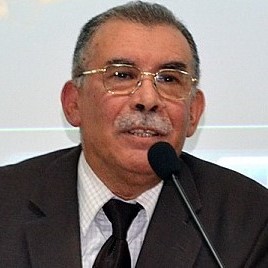
Mohamed Boudhan was an Amazigh writer, thinker, researcher and activist from the Rif, and publisher of the newspaper Tawiza. He was the author of many valuable books and articles on Amazigh identity. May he rest in peace.