Mohamed Boudhan | Why Are Moroccans Afraid of Their Amazigh Identity?
An Almost Unique Case in History:
There may be no other people in history who, like the Amazigh people, deny and reject their own identity while taking great delight in usurping an identity that belongs to another people—even when that other people does not recognize them as part of it. Admittedly, the Lebanese, Jordanians, Iraqis, Syrians, Palestinians, Yemenis, and Egyptians have also abandoned their original, authentic historical identities to usurp an Arab identity. However, the difference between them and the Imazighen lies in the fact that the true Arabs—those of the Gulf—accept their affiliation with them, unlike their stance toward the Imazighen, whom they have always regarded as a non-Arab people. That is why the case of the Imazighen, who insist that they are Arabs and that their Morocco is Arab even though the true Arabs do not recognize them as such, remains an anomaly that is perhaps unique in history, as I have said.
What further heightens the anomaly and singularity of this situation among the Imazighen is that they do not stop at claiming affiliation with other peoples while denying their true Amazigh belonging. They also couple this posture, as a condition for its validity, with an aversion to and contempt for Amazigh identity, looking askance at Moroccans who remain attached to their Amazigh affiliation and proud of their collective Amazigh identity. Many of those who disavow their Amazigh identity continue, moreover, to use the expressions “Berber language” and “Berber man,” deliberately targeting the pejorative sense of the word “barbari” (“Berber”), which refers to a backward, savage, and uncivilized person—corresponding in French to the term barbare (“barbarian”) rather than berbère (“Berber”), contrary to what they claim in order to justify insulting the Imazighen by calling them “Berbers.”
The Explanation Through the Notion of “Sex Change”:
The notion of “sex change,” understood in its national and identity-based sense, offers an explanation for this masochistic behavior: it reflects the hatred that those who have converted to the Arab people harbor toward their own Amazigh people, finding happiness only in identifying with Arabs—just as a morally deviant individual hates and rejects his male virility, finding satisfaction only in identifying with the woman he seeks to imitate. This makes this state of sexual deviance—still in the original sense of the Arabic word “jins,” meaning people and nation—experienced by many Moroccans a veritable amputation of the organ of their identity, no different in its functions and consequences from the surgical amputation of a deviant’s male organ so that he may change sex to become a woman and lose his natural, original virility (see the article: “The Sexual Deviance of the Moroccan State Is Responsible for Arab Bedouins’ Attacks on Moroccans’ Dignity,” in the book “On the Amazigh Identity of Morocco”).
Beyond this sex change, which explains the hostile attitude of these converted Moroccans toward their Amazigh identity—to the point of rejecting it and disavowing any belonging to it—there is another factor that, while leading to the same outcome, feeds and drives this behavior: fear of the emancipation that Amazigh identity represents. Let us explain this issue in a bit more detail.
The Amazigh Movement’s Corrective Ideas Are Bearing Fruit:
Since the Makhzen class called on France in 1912 to ensure its protection, the collective identity of Moroccans was transformed, through French intervention, into an Arab identity, whereas before 1912 this transformation had been confined to individual cases and choices that did not alter the Amazigh character of Moroccans’ collective identity. This shift was reinforced after independence through the policy of Arabization—which means, both linguistically and terminologically, turning Moroccans into Arabs. Thus, post-independence generations grew up convinced that Moroccans are an Arab people and that Morocco is an Arab country of Arab belonging, after being force-fed by schools, the media, political parties, and state institutions… with the idea that the Arabness of Morocco and Moroccans was self-evident, beyond any challenge or debate.
But toward the end of the last century, the Amazigh movement cast doubt on this supposedly self-evident Arabness of Morocco, demonstrating that it was merely an imposed ideological and political construct, refuted by historical evidence, geographical realities, and anthropological truths. The Amazigh movement’s ideas on language, culture, history, and identity forced a retreat from this dogma of Morocco’s Arabness, as evidenced by the 2011 Constitution, which acknowledges that Morocco is not Arab: it stipulates that Amazighness is a major component of Moroccan identity alongside the Arab element, which is only one of the components of this multiple identity in its components and tributaries (this is not the place to debate the crude and erroneous notion of a multiple identity, which does not exist), while recognizing the Amazigh language as an official language of the state.
Beyond these official and constitutional revisions of the notion of identity, driven by the corrective ideas of the Amazigh movement, those same ideas are today prompting a reassessment of many concepts and certainties relating to language, culture, identity, and history. These concepts and supposedly self-evident truths are beginning to fall like autumn leaves in the face of the facts of linguistics, anthropology, historical science in particular, and even population genetics. This has led many Moroccans, especially intellectuals among them, to discover—stunned and bewildered—that they are Amazigh in their identity and belonging, and that Morocco’s Arabness is nothing more than a hoax, an identity theft, and a repudiation of self.
Yet instead of rejoicing at this discovery of their Amazighness, proclaiming their pride in it, and claiming their belonging to it—thereby putting an end to their sexual deviance, that is to say, national and identity deviance—we see them persisting, stubbornly and fiercely, in claiming that they are Arabs and refusing to recognize their Amazigh belonging. Why do these Moroccans insist on continuing to reject their Amazighness and usurp another identity, even after the truth that they are Amazigh and not Arab has come to light?
Addiction to the drug of the Arab illusion:
This is explained by the fact that since independence, they have been living in the “Arab illusion” (Arabness is an illusion only in North Africa; in its original homeland and among its true Arab people, it is real and genuinely exists—we respect it, appreciate it, and have not the slightest problem with it). They have fallen so deeply in love with it that they have become dependent on it, as though on an ideological, political, and intellectual drug that paralyzes the capacity for criticism and questioning. This illusion has thus come to constitute, for them, the very reason for their existence and their lives: through it they think and dream; for it they live and struggle; from it they have fashioned their nationalist and pan-Arabist heroes and idols; and it is what gives meaning to their lives and makes them worth living… Faced with this absolute grip of the “Arab illusion” on the minds and consciousness of these Moroccans—particularly the intellectuals among them—it has become clear how difficult it is to renounce it and break free from it, even after it has been revealed to be indeed nothing more than a simple illusion, even after the fall of Arab nationalism’s heroes and idols in their original homelands in the Middle East, and even after the recognition of Amazighness as the collective identity of Moroccans, now that this has become an established and proven reality. How could they abandon their Arab illusion, by which and for which they have lived, and return to Amazighness, which they have spent their entire lives insulting and disparaging? How could they go back on their Arab illusion and return to their Amazighness, which they have betrayed throughout their lives? How could they apostatize from their faith in their Arab illusion and believe in Amazighness, which they had once declared impious and disowned? How could they leave behind their Arab illusion—which, as I wrote, was the reason for their existence and their lives—and return to their Amazighness to take pride in belonging to it and to defend it, after having been among those who despised and mocked it? This is more than a premature weaning. It is the equivalent of a veritable suicide, through which they lose their lives and their existence, of which the Arab illusion was, as I mentioned, the cause and the source. And when one knows, as has already been emphasized, that this illusion is narcotic in nature and that consuming it creates an addictive dependency, one can understand why renouncing it is a very difficult, if not impossible, undertaking.
The new mawali:
It is entirely natural that they reject Amazighness, even though they are now convinced that, in their collective identity, they are Amazigh in reality and not by illusion, and that they cling to the Arab illusion, even though they are now convinced that it is an illusion and not a reality. Why? Because their life since independence inside and for this illusion—in whose bosom they were raised, whose milk they suckled, and whose idols they worshiped—has rendered them incapable of freeing themselves from their dependence on this illusion and breaking their addiction to it, after it became their refuge, their dwelling, and their only world, to which they grew accustomed, in which and upon which they grew up, and whose subjects they became, chained to it and by it. That is why they fear Amazighness, for to them it represents liberation from this illusion and the breaking of the chains that bind them to it. They fear this liberation because, as their addiction to this illusion leads them to believe, it will turn them into orphans with neither shelter nor home. They are a living example of what are known in Arab-Islamic history as the “mawali,” who are originally slaves freed by the masters who owned them, yet who continue to serve them just as they did when they were slaves. What concerns us in this comparison between the case of Moroccans attached to the Arab illusion and that of the mawali is the answer to the following question: why do the mawali refuse the freedom granted to them by their owners and prefer to continue serving them as they did when they were slaves deprived of that freedom? The answer is that this mawla—who has spent most of his life in servitude, having most often been enslaved as a very young child, as spoils of war forcibly torn from his people and his family—does not know what to do with the freedom he has obtained, for he knows neither relatives with whom to find refuge, nor family to welcome and embrace him, nor a home in which to take shelter and live. Thus, freedom becomes for this freedman like an exile and a punishment harsher than the slavery in which he lived. That is why he fears this freedom and rejects it, for to him it means being lost and wandering. Consequently, he chooses this servitude—voluntary this time—and prefers to return to his master’s service rather than choose a freedom he knows neither how to exercise nor how to manage, for he has lived his entire life as a subordinate subject to orders and has never acted freely to decide for himself what he wants for himself. The same holds true for Moroccans who were forcibly torn from their Amazighness at birth and have lived their entire lives as “slaves” to the Arab illusion. They have known no belonging other than to this very Arab illusion, to which they have remained submissive, serving it with sincerity and loyalty, and drawing from it their existence and the meaning of their lives, as has already been noted. And when they discover today the truth of their Amazigh belonging—which frees them from servitude to the Arab illusion and from their false, usurped belonging—they reject this liberation because they have never lived free in terms of identity and therefore do not know how to take advantage of the opportunity Amazighness offers them to free and emancipate themselves from the captivity of the Arab illusion. They fear this liberation because they are afraid of being driven out of their Platonic cave (in reference to the myth—or allegory—of the cave set forth by Plato in “The Republic” to explain the difference between the world of real truth and that of false truth), inside which they have lived their entire lives, until they convinced themselves, like the dwellers of Plato’s cave, that illusion is certainty and falsehood is truth. That is why they prefer to live as slaves to the Arab illusion rather than live free and independent in terms of identity, for this freedom and autonomy frighten them because they are unaccustomed to them and have never practiced them, just as the true mawali fear freedom and independence and prefer to live in servitude rather than live free and independent. They fear this freedom and independence, rejecting them to such an extent that they oppose elevating Darija to the status of a language of instruction and education—just as they do with the Amazigh language. This is despite their claims that Darija, too, belongs to their “Arab illusion.” Why do they oppose its promotion and standardization if it is part of that illusion? It is because Darija is an authentic Moroccan language. Preparing it to serve as a language of teaching and writing, much like Arabic, would signify linguistic independence from the Arab illusion. This is precisely what they categorically refuse, for they fear anything that leads to liberation and independence from this illusion, as previously noted. These are the “new mawali,” who reject the freedom granted by their Amazigh identity. They prefer servitude to the Arab illusion over living as free citizens with an independent identity that is not subordinate to it. They are so reliant on identity-based servitude that they fear identity-based liberation. This is why they need a specific remedy—and indeed a treatment—tailored to “identity immunodeficiency syndrome.”
The Failure of the Intellectual and the Necessity of State Intervention
One always expects the intellectual to be among the first to oppose illusions and myths, and to combat false consciousness in order to spread a healthy, upright awareness in its place. It has always been assumed that this is their primary mission, a rule to which they adhere and by which they act. However, the Moroccan intellectual, as a result of their identity-based sexual deviance, has strayed from this rule and failed in this mission. They have themselves become the propagators of false consciousness and the fierce defenders of the Arab illusion—the source of this false consciousness. They are the ones who reject their Amazigh belonging, viewing it as an obstacle to the spread of their Arab illusion (see: “Amazighité and Moroccan Intellectuals” in the book On Amazighité and the Amazighophobic Tendency). This stems from the fact—while also being the cause—that Moroccan intellectuals are the greatest consumers of the drug of the Arab illusion and the most addicted to it, due to its ideological and intellectual nature. Because we are speaking of the intellectual and not the uneducated citizen, the result is that “the worst form of alienation is the alienation of intellectuals; for their alienation is not limited to themselves, but is transmitted to others” (Writer Mimoun Amsbrid, “‘The Echo of Creation’ or ‘Learned’ Ignorance”).
This explains why, if the Arab illusion still enjoys widespread currency in Morocco despite all the facts confirming the Amazigh character of Morocco and its people, it is due to the failure of intellectuals and the abandonment of their role as enlighteners. Under the influence of the drug of the Arab illusion, they have transformed into defenders of deviance—again, in the national and identity sense of the term—and into propagators of illusion and lies. They have become promoters of “learned ignorance,” in Mimoun Amsbrid’s phrasing, despising everything local and authentically Moroccan while dreading the identity-based emancipation embodied by the Amazigh language and culture. Furthermore, they still lack the courage and honesty required to return to their Amazigh roots and take pride in them, as the Algerian intellectual Kateb Yacine did. Raised to believe he was Arab because he came from an Arabic-speaking family (speaking Darija), and having been taught in school that patriotism required fighting Amazigh identity because it was linked to colonialism and division, Yacine eventually discovered that the Algerian people—and with them all of North Africa—are Amazigh in their reality and belonging. He thus became one of the most ardent defenders of Amazighité after having been hostile to it, as he himself recounts (see the text: “When Will Moroccan Intellectuals Act Like the Algerian Intellectual Kateb Yacine?” in the book On the Amazigh Identity of Morocco).
Given the role intellectuals play in spreading the Arab illusion and maintaining Moroccans in a state of identity-based dependency and submission to this illusion—fearing its loss and liberation from it, as with the mawali described earlier—it seems impossible for those who have undergone this identity and “sexual” transformation to free themselves spontaneously from this system of identity-based slavery. Nor is it likely they will realize and proclaim that they are Amazigh, independent in their belonging and collective identity, without the state’s intervention. The state must act through its authorities, its institutions, and particularly its educational system, to liberate Moroccans from this humiliating dependency on the Arab illusion. This requires the state to lead by example, proclaiming itself an Amazigh state in the territorial sense—that is, a state that derives its identity from its Amazigh African homeland. It was this state that led Moroccans into this dependency when it called upon France for protection. Therefore, it is the state’s responsibility to liberate them from this dependency in order to complete Morocco’s independence and the recovery of its full sovereignty.
Arabic version | French version

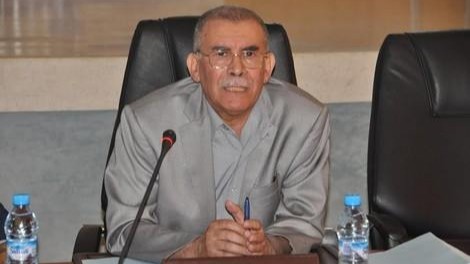
Mohamed Boudhan was an Amazigh writer, thinker, researcher and activist from the Rif, and publisher of the newspaper Tawiza. He was the author of many valuable books and articles on Amazigh identity. May he rest in peace.