Behind the Scenes of TV Production: Offense to Amazigh Culture and Disrespect for Its Artists
Morocco’s Amazigh television production landscape is rife with painful contradictions. While substantial public funds are poured into producing shows and artistic works meant to celebrate Amazigh culture and preserve its memory, some industry professionals continue to treat the Amazigh language and its artists with deep contempt. To them, this domain is nothing more than a career stepping stone or a financial windfall, far removed from a cultural and civilizational heritage worthy of appreciation.
During shoots for Channel 8 (Tamazight TV), several Amazigh actors reported shocking remarks made by media personnel. One producer notably addressed the actors by saying: “Once you’ve said your little ‘nigh nigh’ stuff over there, you will just look and speak to each other and keep quiet.”
This is not merely an insult to the actors, but a blatant disdain for a language that anyone working on publicly funded productions should respect. The height of irony lies in the fact that some of those guilty of this behavior are themselves from the Amazigh community—sometimes without even realizing it—yet treat the language of their ancestors as nothing more than an object of ridicule.
Who profits from Amazigh production, and who pays the price of exclusion?
Such behavior demands a firm stance from network executives and production companies. The goal is not to exclude those who do not speak the Amazigh language, but to ensure respect for the language and the actors who bring it to the screen. No one is required to learn a language they do not speak, but everyone has an absolute duty not to mock it.
What makes this all the more painful is that such behavior occurs in a particularly precarious professional and social context for many Amazigh artists, writers, and actors, who fought for the official recognition of the Amazigh language and the creation of a dedicated public television channel. While influential directors and producers reap lucrative profits from the television production market, many artists sink into poverty and lack of opportunities, forced to accept working conditions and meager pay that fall far short of their efforts.
This raises a fundamental question:
For whom are these works truly being produced? Who actually benefits from their budgets? And where is the professional fairness that should accompany a public policy that chose to dedicate an entire television channel to the Amazigh language and culture?
Saida Titrit: when an artistic invitation turns into a cultural insult.
It is against this backdrop that the incident experienced by singer Saida Titrit must be analyzed. What happened to her cannot be dismissed as a minor misunderstanding or a slip of the tongue during a phone call; it is another episode in a broader debate over how Amazigh artists and culture are treated within the broadcasting system.
In a Facebook post shared on November 13, Saida Titrit revealed that she had been contacted to appear on a television show. During the call, the PR manager shocked her by blurting out: “We want to film that Chleuh thing,” referring to the Amazigh New Year celebrations.
Some might dismiss this as harmless casual banter. Yet words are never neutral, especially when coming from a communications manager speaking on behalf of a production company or a public channel. There is a world of difference between pitching a show dedicated to the Amazigh New Year and reducing a major cultural and civilizational milestone to a derogatory phrase like “that Chleuh thing.” The former reflects professional discourse that respects its subject; the latter reveals a glaring disregard for basic communication standards.
Inviting an artist to participate in a television project should never be reduced to a casual phone call: it is a professional process rooted in respect and consideration, especially when it involves a publicly funded project meant to highlight a foundational pillar of Moroccan identity.
Titrit: far more than just a name on a guest list.
On a personal note, I had the opportunity to work with Saida Titrit as a show developer and director while filming an episode dedicated to her career for the program Timzouwra, produced for the Tamazight channel in 2019.
That encounter allowed me to discover a deeply respectable and talented artist, intensely attached to her country’s heritage and cultural identity. For her, Amazigh song is far more than simple entertainment: it represents a collective memory and a powerful vehicle for expressing emotion and social transformation.
This is where the fundamental contradiction lies: how can a production company invite an artist to celebrate Amazigh culture while employing PR officers incapable of speaking with the professional courtesy and respect her career deserves?
Tamawayt: when the voice speaks in the language of memory.
Saida Titrit has built a rich career dedicated to the Amazigh repertoire, showcasing all its musical and expressive nuances.
The uniqueness of her performances lies in her mastery of vocal inflections, fluid melodic transitions, and harmonious ornamentation, alongside her mastery of the art of Tamawayt.
Endowed with extraordinary breath control, she navigates musical phrases effortlessly and handles vocal launches with skill, without her smooth, poignant timbre losing any of its balance or power.
Her career combines a distinctive voice, rigorous professionalism, a commanding stage presence, and deep roots in Amazigh culture. The true measure of an artist is not found in a fleeting hit song, but in their lasting contribution to the musical and aesthetic memory of their society.
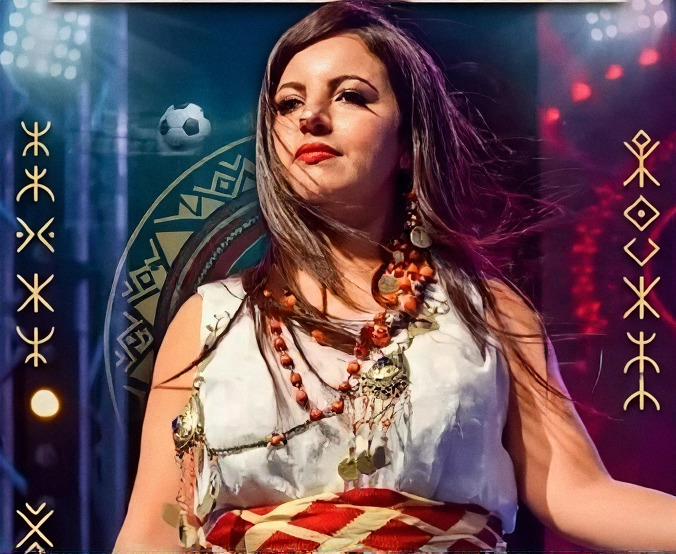
The cyberbullying targeting Saida Titrit is unacceptable.
The matter did not end with the PR officer’s inappropriate comments. It escalated into a wave of online abuse following the artist’s post, including a particularly vile comment: “You look like someone who consumes cannabis and mahia.”
This is a form of rhetoric that engages with no ideas and offers no artistic critique, but viciously attacks a person’s physical appearance and dignity. Saida Titrit responded: “Does my face look like that of a mahia and cannabis user, fake account?”, calling out the anonymous troll hiding behind a screen.
This phenomenon warrants deep sociological analysis. The concept of deindividuation helps explain how online anonymity and a sense of impunity foster aggressive behavior. Similarly, the concept of cyberbullying highlights these toxic drifts, where social media platforms turn into outlets for abuse rather than spaces for debate.
What is most troubling is that the artist is forced to defend her appearance and honor instead of seeing public attention focused on her artistic trajectory and the systemic issue she raised.
Does a screen suffice to shield accountability?
This incident goes beyond the individual blunder of a PR officer and raises fundamental questions about the philosophy of Amazigh television production and the institutional culture of public media.
Public broadcasters are not merely commercial outlets chasing ratings; they are institutions tasked with representing Moroccan society in all its linguistic, cultural, and civilizational diversity.
Celebrating the Amazigh New Year must not be reduced to a routine media ritual consisting of a few musical interludes and folkloric reports. It must embody a genuine institutional awakening: Amazigh culture is a vital core of Moroccan identity, and the artists who preserve this heritage deserve respect and fairness.
Article 5 of the 2011 Constitution established the Amazigh language as an official language and common heritage for all Moroccans. Respecting this language is therefore neither a favor granted to artists nor a concession to special interest demands, but a constitutional mandate.
It is contradictory for public institutions to allocate budgets for cultural diversity without translating that vision into respectful communication with artists, improved working conditions, and equitable management of production contracts.
It is not enough to offer mere token apologies to Saida Titrit—though an apology is essential when harm has been done. What is required is a substantive debate on the dignity of Amazigh artists, their working conditions, selection criteria for production staff, and the management of public funds allocated to Amazigh-language programming.
A final word: learn to respect the artist before turning on the camera.
Some may argue that my defense of Saida Titrit stems primarily from her status as an Amazigh artist. That is true. But this issue also touches on the dignity of every Moroccan artist and the need to rehabilitate the cultural value they carry.
We can disagree with an artist’s choices, criticize a song, a performance, or a stance. However, debate must never degenerate into insults, and professional communication must never serve as a pretext to demean an artist or their culture.
As for those who hide behind anonymous accounts to spew abuse, no one asks them to love every artist, but human respect is a basic requirement above all else.
To the PR managers of production companies and media outlets, we say: before inviting an artist to sit in front of the camera, first learn how to address them behind the scenes. An artist is not mere studio decor, and Amazigh culture is not “that Chleuh thing.”
It embodies the memory of a people, the history of a language, and the creative work of generations. A national network loses all meaning if studio personnel disrespect behind the scenes the very artists for whom it was created, just as it is absurd to claim to celebrate a language while disparaging it in practice.
Arabic version | French version