The Need for Figures Like Rachid Aïlal
Challenging the “sheikhs”:
What strikes me most about the writings and perspectives of Rachid Aïlal, author of Sahih al-Bukhari: The End of a Myth (Dar Al-Watan, first edition, 2017), is the way he provocatively challenges those who style themselves as the “sheikhs” of Islam—those who claim to be the sole guardians of religious truth—along with their counterparts among writers and intellectuals. What I find even more compelling about this provocation is not simply that he uses evidence and logic to debunk their status as scholars and expose their “scholarly ignorance” (a term coined by Maimoun Amsbrid in a different context). Rather, it is the nature of the questions he poses. These are questions for which they find no answers within their usual arsenal of ready-made responses, which are typically recycled from traditional lineages and fatwas found in the yellowed pages of ancient texts.
Among these questions are the following: What is the scientific evidence for the historical existence of Abu Bakr and Umar? Who actually wrote the book Sahih al-Bukhari? What deepens the anger and embarrassment of these “sheikhs” is their utter inability to answer, even though the subjects of these questions represent, in their eyes, self-evident truths that should never be doubted. And why can they not answer what they once considered obvious? It is because before even asking his questions, Mr. Aïlal has already dismantled the foundations upon which their “truth” was built. For instance, before asking who wrote Bukhari’s book, he first demonstrated that there is no surviving original manuscript that could prove the work’s attribution to al-Bukhari. He also proved that Sahih al-Bukhari remained unknown and was never mentioned in any text for more than two and a half centuries after al-Bukhari’s death. The logical conclusion is that the book did not exist during that period, meaning it could not have been written by al-Bukhari, who died over 250 years before the title ever appeared.
It matters little here, as with the questions regarding Abu Bakr and Umar, whether one agrees or disagrees with Mr. Aïlal. What matters is that he poses questions to which the “sheikhs” and their intellectual allies—who are accustomed to having an answer for everything, even in fields like medicine, astronomy, nuclear physics, or molecular biology—are unable to respond. This is because Mr. Aïlal has systematically destroyed the very foundations from which these “sheikhs” construct their well-known answers.
It is precisely this inability to address Mr. Aïlal’s questions that explains their descent into insults, defamation, character assassination, and personal attacks. This is the only response they have mastered when such questions reduce them to silence. One of these “sheikhs” did not even hesitate to mock Mr. Aïlal regarding his mother’s illness—may God heal and protect her. Such behavior reveals the level of baseness to which his detractors have sunk, simply because he provoked them with questions that shake their certainties and debunk their “truths.” Furthermore—and this is the primary reason for these attacks—his questions threaten the very “rent” they collect by promoting and repeating these supposedly self-evident truths, which are destined to collapse at the first sign of scientific scrutiny.
A new vision for the renewal of Islamic thought:
For over a century, following the shock of their initial encounter with European modernity, Muslims have been grappling with a question that has become almost eternal: why have Europeans, who are not Muslims, progressed while Muslims have fallen behind? And what is the solution to rise again and escape this historical stagnation? The majority of the answers and solutions proposed have not moved beyond a general call for the renewal of Islamic thought.
There is no doubt that this renewal represents a useful and timely solution; indeed, it is necessary, just like the renewal required in all other non-religious fields and subjects. But in what sense have the proponents of this call understood the renewal of Islamic thought? If we examine the literature dedicated to this renewal since the era of Jamal al-Din al-Afghani (1838–1897) and Muhammad Abduh (1849–1905), through the rise of the Muslim Brotherhood and up to the “sheikhs” of the 21st century, we find that this renewal consistently means refreshing the old, reviving it, and bringing it up to date. This is summarized by the notion of returning to the path of the pious ancestors—the pure sources of Islam as embodied by the Salaf. Consequently, renewal ends up meaning the perpetuation of the past and its transformation into a lived and practiced present, exactly as it was during the first decades following the emergence of Islam—the era of the Prophet (peace and blessings be upon him) and the Rightly Guided Caliphs.
Professor Rachid Aylal, however, has introduced a fundamentally different conception of what it means to renew Islamic thought. For him, renewal implies rethinking this very thought in an epistemological sense by questioning the credibility and authenticity of its heritage sources. He demonstrates that a significant portion of this tradition, in its historical dimension, is entirely fabricated and forged, originating from neither the Quran nor the Prophet (peace and blessings be upon him). The most striking example of this invention lies in the Hadith narratives, which have effectively shaped the bulk of the Islam we know and believe in today. Yet, there is no convincing evidence to attest that these Hadiths are actually the words or deeds of the Prophet, especially since they were recorded and attributed to him more than a century and a half after his death, without having been written down, known, or even mentioned before that period. This is why Professor Aylal’s work regarding Sahih al-Bukhari, in which he established that it was a mere legend, is considered a genuine epistemological break in the approach to Islamic heritage. He did not limit himself to asking whether the Hadiths in Sahih al-Bukhari were authentic; he also asked who actually composed the Sahih al-Bukhari and in what era. In other words: is there any proof that al-Bukhari himself was the one who wrote his Sahih?
This is precisely the kind of renewal that Islamic heritage—its thought, jurisprudence, history, and Sira—requires. It is a renewal that does not focus on the specific content of this heritage or whether it suits our modern age, but rather on its epistemological foundation. This foundation is summarized by the process of an’ana (the chain of oral transmission) as the primary source of the truths contained within this tradition. Re-examining oral narrative as the source of religious and historical truths in Islam—and consequently re-examining the very truths produced by these narratives—amounts to an epistemological break in our relationship with Islamic heritage. Without this break from the an’ana, which serves as the instrument for producing religious truth—which is then translated into articles of faith, religious law, and daily conduct—all other attempts to critique, correct, modernize, adapt, or purge the heritage of superstition are merely a repetition of the heritage by itself. As the late Mohammed Abed Al-Jabri aptly put it, they remain a “patrimonial reading of the patrimony.”
Hence the pressing need for figures like Professor Aylal to liberate minds from the myth of the narrative and the narrative of the myth. This process simultaneously represents a liberation of Islam from the hands of those who monopolize it in the name of these myths and narratives. It is this liberation that will make Islam a religion valid for all times and places—unlike the approach of the “sheikhs” of the narrative myth, who persist in making the faith valid only for the mythical time and place of a mythical Abou Houraira.
As for the objection—as formulated by many “sheikhs,” their peers, and their followers—that questioning the oral narrative would lead to questioning Islamic figures known only through oral transmission, or even the Quran itself (which was also an oral text before being recorded in writing), it is merely an attempt at blackmail. It aims to intimidate anyone calling for a re-examination of the epistemological foundations of Islamic heritage by suggesting that such an inquiry could undermine the Quran or even the Prophet (peace and blessings be upon him). However, even assuming its authors are moved by good intentions, this objection rests on a false analogy; every situation requires its own discourse, and every case demands a distinct treatment. One cannot prevent people from doubting the “veracity” of lies for fear they might doubt what is established as truth and certainty. To do so would be an explicit call to spread myths and falsehoods as long as they remain beyond challenge. The objective is not to dismiss all information transmitted orally, but to examine whether the conditions for validity—in an epistemological sense—are met. When examining the an’ana (chain of narration) of the Hadith in light of these conditions, it becomes clear that they are fundamentally and entirely absent.
A New Non-Secular Opponent
Because Professor Aylal relies on the Quran and scientific methods of critical analysis to deconstruct legends built on the “myth of narrative,” he represents a new kind of opponent for the “sheikhs” of that myth—one quite different from their traditional adversaries, such as the secularist, the communist, or the materialist. It was easy for these clerics and their followers to dismiss those critics by labeling them as infidels or atheists (which is how they choose to understand secularism). They were portrayed as ignorant of the reality of Islam, people who adopted a materialist interpretation of the universe and denied the existence of God. Consequently, the clerics argued they did not deserve a debate on religion in general or Islam in particular. With a single stroke of a pen, these “sheikhs” could discard such opponents, ensuring they posed no “danger” to their mythical thinking.
Rachid Aylal, however, represents a very real danger to them. He threatens their superstitious thinking because he is himself a Muslim and a believer. He opposes them by relying on the very texts of the heritage they use to issue fatwas and legislate, thereby exposing their contradictions and vacuity. In this, he differs from that first category of critics—those the sheikhs classify as secularists or communists—who do not dedicate the necessary time to studying Islamic heritage or reading its “yellowed books.” Rachid Aylal has done exactly that. This has allowed him to turn the weapon of heritage against these “sheikhs” with a level of mastery and skill that enables him to refute their myths and answer their absurdities. This is precisely what infuriates them: they cannot dismiss him by accusing him of being a secularist, a communist, or an atheist ignorant of Islam and its legacy. They are left with no choice but to resort to insults, defamation, and personal attacks—methods that have absolutely nothing to do with intellectual debate or addressing the legitimate questions raised by Mr. Aylal.
An Islamic Revolution Against “Islam”
The Islam we practice today—whether in our beliefs, our behavior, our legislation, or our politics—is a version of the faith shaped by hadith narrators more than a century and a half after the death of the Prophet (PBUH). This “constructed” Islam reached its definitive form during the Abbasid era, and it is this model that has been handed down to us as the standard every Muslim must follow. Because this version of Islam was designed to serve the interests of those in power, rulers throughout history have encouraged its spread, its teaching, and its normalization. They have worked to impose it as the only true Islam—the Islam of caliphs, sultans, and “Commanders of the Faithful.”
Consequently, any religious reform—whether it is framed as a “reform of religious affairs” or a “restructuring of the religious field,” as we see in Morocco—will remain futile unless it constitutes a revolution against this fabricated Islam invented by hadith narrators. The essential tool for this revolution, which is necessary to move beyond a traditionalist reading of our heritage, is epistemological criticism. This critique must target the very sources from which we derive our knowledge of Islam—sources that rely almost entirely on oral tradition. This is precisely the intellectual work being carried out by Rachid Aylal.
This revolution against the Islam shaped by hadith narrators is, at its core, a revolution for Islam. Its purpose is to strip away more than 75% of the content added by these narrators, which has grown so pervasive that the original Islam brought by the Quran and practiced during the Prophet’s (PBUH) lifetime has been effectively erased. The Islam practiced today—in faith, ethics, law, politics, and the authority of “sheikhs”—is not solely the Islam of the Quran, nor is it the Islam of the Prophet (PBUH) and his companions during his lifetime. I emphasize: during his lifetime, not after his death. For the most part—more than 75%—it is an Islam constructed by the reporters of hadiths.
The most damaging aspect of this body of hadiths is its influence on the Quran itself. When the exegesis and understanding of the Holy Book are made subservient to hadiths, these narrations end up “shaping” the Quran indirectly by dictating how we interpret it. In this way, the hadith—which may be the product of myth-making or outright invention—comes to exercise control over the Quran, which is meant to be the ultimate source of Truth and Justice. The Quran thus loses its status as absolute truth and becomes dependent on what may be nothing more than a lie.
As I have noted, rulers were the primary drivers behind the spread of this fabricated Islam, often aided by narrators who were subservient to them. These leaders found in this constructed version of the faith a source of legitimacy for their rule and a justification for their despotism. This is why a revolution against this version of Islam cannot succeed if it is carried out by thinkers like Rachid Aylal alone. It must be actively supported and encouraged by the state and its leaders. The state must work to integrate epistemological criticism—such as Mr. Aylal’s work on the hadith, the true architect of this constructed Islam—into the institutions that shape our understanding of religion. This includes schools, the media, and even Friday sermons. Naturally, this assumes that the state’s leaders no longer rely on a fabricated Islam to justify absolute power and authoritarianism, having instead embraced democracy. In such a framework, the legitimacy of their authority would derive from democracy itself, rather than a human-constructed Islam.
All of this confirms that any genuine religious reform, particularly within Islam, is intrinsically linked to a sincere commitment to political reform. European history proves this: when Europe sought to break free from political despotism, it first had to liberate itself from the religious despotism of the Church, which supported and protected political tyranny. In Islam, this religious despotism is represented by the authority of hadith narrations and the “yellowed books” of traditional Islamic discourse. As we have seen, this religious authority sustains and shields political despotism. Therefore, those who oppose the epistemological critique of Islamic sources led by figures like Rachid Aylal are, in reality, the defenders and protectors of political tyranny.
Arabic version | French version
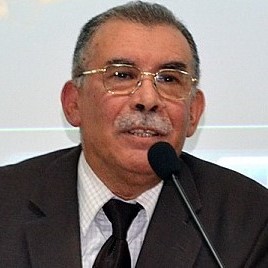
Mohamed Boudhan was an Amazigh writer, thinker, researcher and activist from the Rif, and publisher of the newspaper Tawiza. He was the author of many valuable books and articles on Amazigh identity. May he rest in peace.