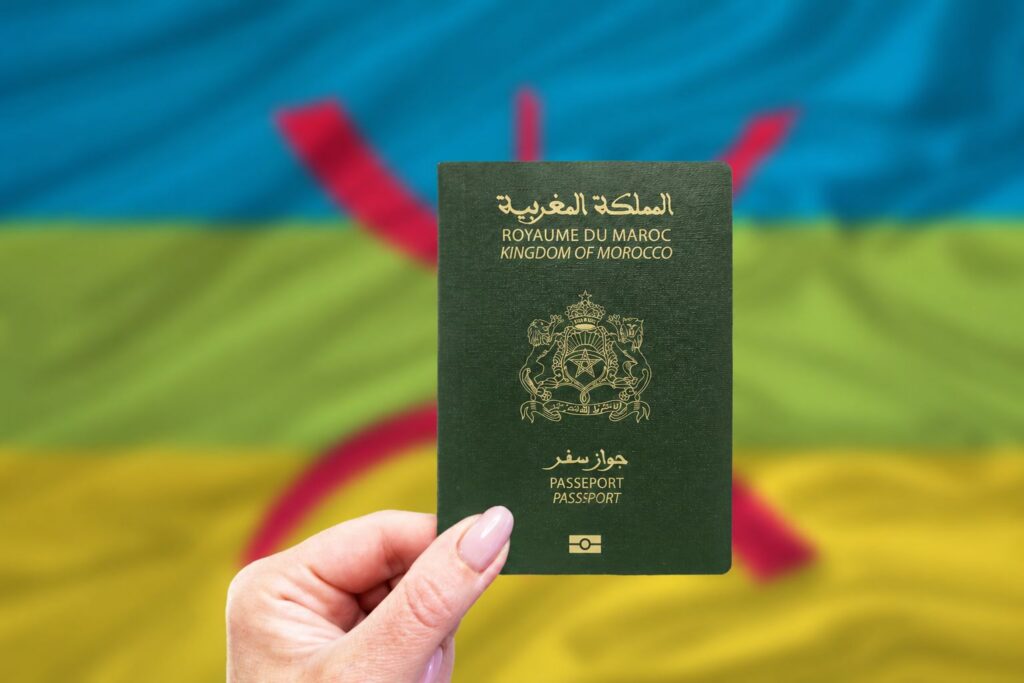
After the Passport, Calls Grow to Add Tamazight to Moroccan ID Cards and Banknotes
Many observers see the adoption of the Amazigh language in the passport as a significant step toward implementing its official status
The announcement that Tamazight will feature in Morocco’s new biometric passport, set to enter circulation this August, has sparked a wave of positive reaction on social media. Many Moroccans welcomed the move as a further step in strengthening the place of the Amazigh language within public institutions and administrations, and as fresh confirmation of its status as an official language under the country’s constitution.
Social media users praised the addition of Amazigh, which will soon appear alongside Arabic, French and English in the new biometric passport. For many, including the language on one of the most important official documents a citizen holds carries both symbolic and practical weight, reflecting progress in implementing constitutional provisions and the organic law on the official status of Amazigh.
Amazigh activists were more divided. Some argued the move came late, pointing out that it follows years after the adoption of Organic Law No. 26.16, which sets out the stages for implementing Amazigh’s official status and the ways it should be integrated into public life. Others saw it instead as the start of a genuine rollout of the law, particularly regarding the use of Tamazight within government administrations and public services.
Chapter Six of the organic law, devoted to “the use of the Amazigh language in administrations and public services,” lays out a series of obligations to be implemented gradually. Article 21 requires that several official documents be issued in Amazigh alongside Arabic: the electronic national ID card, marriage certificates, passports, various types of driving licenses, residence permits issued to foreign nationals living in Morocco, and other personal cards and certificates issued by the administration.
Article 22 further requires that coins, banknotes, postage stamps and official government seals carry text in both Arabic and Amazigh. Article 23, meanwhile, obliges government authorities, public institutions, local administrations and public services more broadly to provide official forms and public-facing documents, certificates issued by civil registry officers, and documents issued by Moroccan embassies and consulates, in both Arabic and Amazigh.
Several Amazigh organizations are calling for faster implementation of the organic law’s provisions, to ensure Tamazight has a genuine presence as an official state language on par with Arabic, rather than appearing on only a handful of administrative documents. Many activists are also pushing for its use to be extended to national ID cards, coins and banknotes, postage stamps, and the full range of administrative documents and services, in line with constitutional and legal requirements, to strengthen equality between the two official languages across public institutions.
Many observers see the adoption of Tamazight in the passport as an important step toward implementing its official status. But completing this effort will depend on accelerating implementation of the law’s remaining provisions, to ensure Tamazight appears across all official documents and public services within the timeline set out in the organic law.
Source: Amaḍal Amaziɣ
Arabic version | French version



it’s taking so long